Ingmar Bergman Vol 3. Review by Alan Price. And so, we’ve now reached the third BFI volume of Bergman films. Here we find four masterpieces, one near-masterpiece, one very good under-appreciated work, an interesting failure and (for me) a film that’s Bergman’s worst.
film
Robert Bresson: L’Argent and The Trial of Joan of Arc. Review by Alan Price. Of all the great film makers of the 20th century Robert Bresson was the most solely spiritual. His camera revealed what was concealed: a cinematic representation, or more subtly an apprehension, of what we would call the soul of his characters.
Desire / All My Good Countrymen (Vojtech Jasny). Review by Alan Price. “Jasny is the spiritual father of the Czech New Wave” claimed Milos Forman. Vojtech Jasny drew upon the lyricism of 1930’s Czech cinema to create his own dreamy naturalism and generosity of spirit that influenced those young directors of the 1960’s. Now we have the opportunity to see fine transfers of two key Jasny films: Desire (1958) and All My Good Countrymen (1968).

A Blonde in Love / Black Peter (Milos Forman). Review by Alan Price. Black Peter is one of the first early sixties films of covert dissent and ushered in a new kind of Czech cinema. But A Blonde in Love is Forman’s even more confident realisation of his original tender, angry and humane authorship. Both are essential viewing.
Larks on a String, Jiri Menzel. Review by Alan Price. The opening twenty three minutes of Larks on a String are exhilarating. They set the tone for the rest of this marvellous film whose lyric and comic surface has a deceptively light touch barely masking the pain experienced in its totalitarian landscape.
Pickpocket (Robert Bresson). Review by Alan Price. Published in 1975 Bresson’s tantalisingly philosophical book Notes on the Cinematograph consists of notes, fragments, observations, wise lists about life and the difficult challenges of filmmaking. Bresson’s remark about the camera’s ability to indifferently record life happening un-dramatically, in front of the lens, feels more than appropriate for his 1959 film Pickpocket.
Alfred Hitchcock Presents: The Complete Series. Review by Alan Price. Hitchcock said he had always wanted to work in the short story. ‘The small simple tale of a single idea building to a turn, a twist at the end. A little shocker. The story that’s lost when stretched to the length of a movie.’
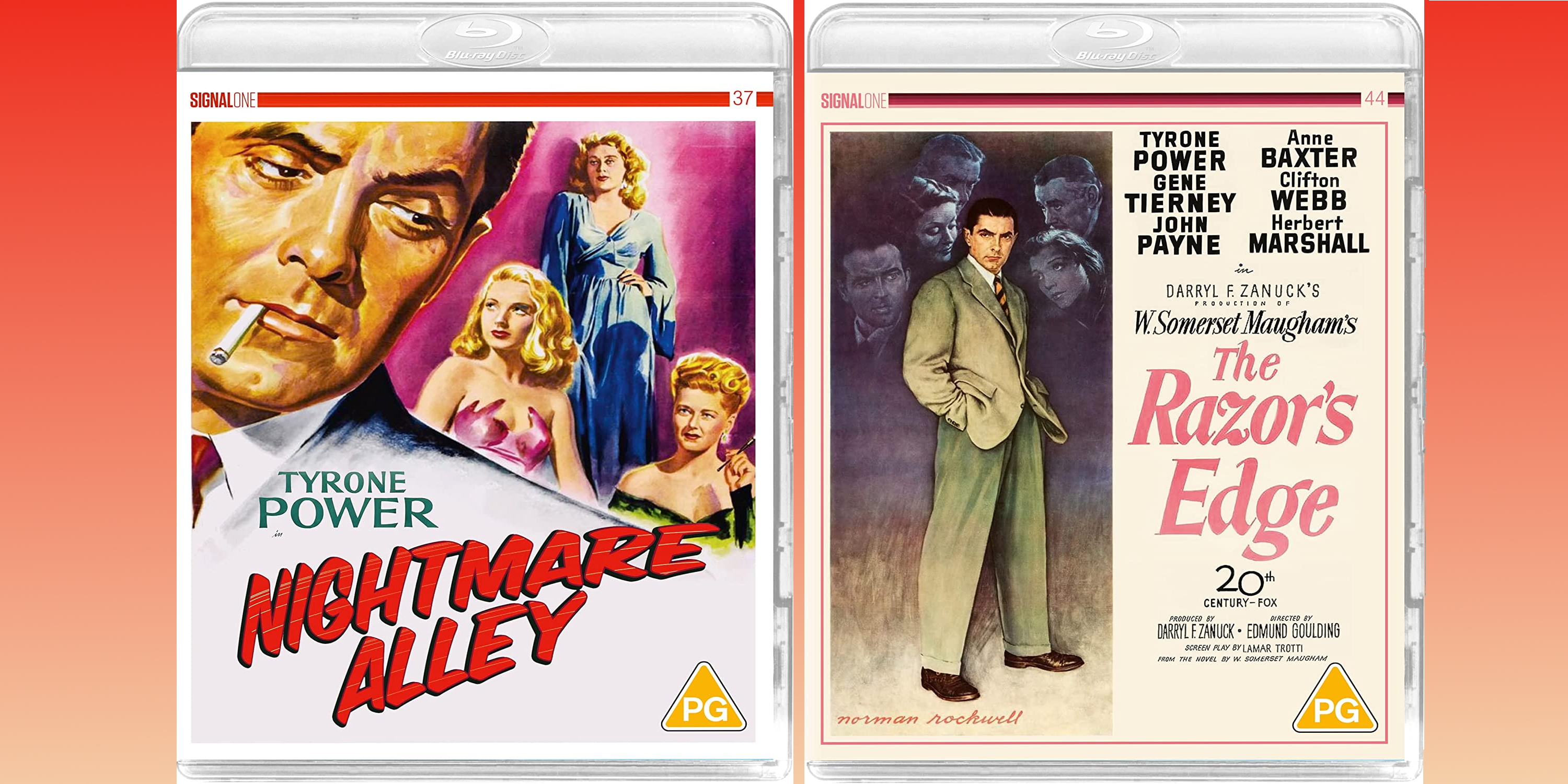
Nightmare Alley and The Razor’s Edge. Signal One Blu Rays 2022. Review by Alan Price. Nightmare was violently against the grain and a box office flop. And Razor resolutely conventional yet questioning societal norms was a huge hit. Both are the film children of Edmund Goulding who on the evidence of these films and others (The Old Maid and Dark Victory) was a fine director.
The Lighthouse (2006). Review by Alan Price. The opening images of The Lighthouse (2006) set the scene for the film’s reoccurring visual motifs. Villagers, soon to be refugees, dancing and singing on a railway track. A badly burnt antiquarian book. The sleeping face, filmed on a train, of its female protagonist.
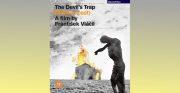
The Devil’s Trap – Blu Ray (Second Run). Review by Alan Price. The Devil’s Trap 1961) was directed by Frantisek Vlacil and is considered the first part of a loose trilogy of historical films that includes Marketa Lazarova (1967) and The Valley of the Bees (1967). All three films display an arresting black and white imagery that recalls Sergei Eisenstein – The Devil’s Trap’s pastoral lyricism evoking The General Line.
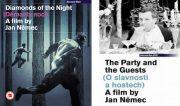
Diamonds of the Night (1964) / The Party and The Guests (1966). Review by Alan Price. Both of these Nemec films have been beautifully restored on Second Run. They are essential viewing for an understanding of how brave and uncompromising 60’s Czech cinema dared to be.
Love (Szerelem) Karoly Makk (1971). Review by Alan Price. Love adapts and merges two short stories Love (1956) and Two Woman (1962) written by the famous Hungarian writer Tibor Dery. It is set in 1953 during the Stalinist period in Hungary and explores two forms of love.
By Alan Price • film, year 2022 • Tags: Alan Price, film