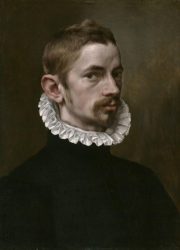
Faces Then focuses on the 16th-century, regarded as the golden age of the portrait, when it was the rich, the powerful and the burgeoning bourgeoisie who could afford to have their portraits taken. Faces Now confines itself to the period since 1990, after the fall of the Berlin Wall, and, with it, the collapse of ideologies and artistic parameters.
art
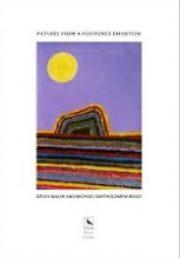
Norbert Hirschhorn finds mythic significance behind a word & image collaboration between an artist and a poet

Jill Harris enthuses about a remarkable tapestry on show at London’s Fleming Collection
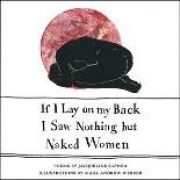
Jacqueline Saphra’s new pamphlet collection may not take long to read – but it leaves a lasting impression on Rosie Johnston
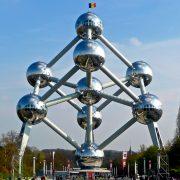
What exactly is the essence of Belgium? Far harder to pin down than French chic or English sang-froid, the nation’s uneasy mix of Walloon and Flemish, surreal and down-to-earth, all miraculously held together, is perfectly encapsulated by the Atomium – a giant, futuristic structure on the northern edge of Brussels.
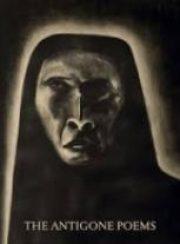
Norbert Hirschhorn takes a long cool look at a new poetry & art volume from Australia
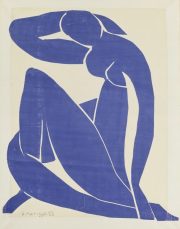
Matisse’s Startling Late Works: The Cut-Outs. Tate Modern, 17 April – 7 September 2014 No wonder Henri Matisse is well loved. His works are sensuous, jubilant, gorgeous: they envelop and immerse the viewer in voluptuousness, in light that finds itself materialised as coloured form, coloured space.
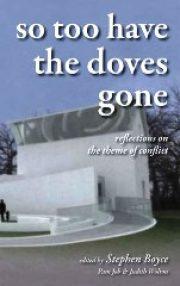
Merryn Williams is thankful that many poets remain unconvinced about the necessity of war and find compelling ways to say so in this new anthology

In Brussels, art nouveau found its most complete expression in the architecture of Victor Horta. Now the Brussels’ Musees Royaux des Beaux Arts has devoted a huge new “Fin-de-Siecle” section, a museum in itself, to the artistic context in which he thrived.
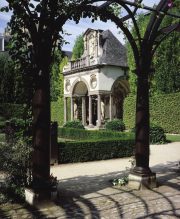
Now fully restored, with its chequered Flemish floors, semi-circular gallery and portico inspired by a Roman triumphal arch, the Rubenshuis, Ruben’s home in Antwerp, is one of the most popular attractions in a vibrant city, just under an hour’s train journey from Brussels.

I first came across the work of Delhi born artist Dayanita Singh in an exhibition and book, Myself Mona Ahmed (2001), a photo-essay about an aging eunuch transsexual (hijra) living in a graveyard in Old Delhi. In this extraordinary body of work – the book contains various different kinds of text alongside the photographs) – one sensed not only compassion, but a collaboration between the person in front of the camera, and the one looking through the lens.
With their green goats, giant roosters and bridal couples flying through the air, Marc Chagall’s works appear fantastic, but he insisted he only painted direct reminiscences of his own life.
By Barbara Lewis • art, exhibitions, painting, year 2015 • Tags: art, Barbara Lewis, exhibitions