David Lightfoot (1941 – 2026) – teacher, poet, novelist & editor:
some recollections by friend and colleague Rob Etty
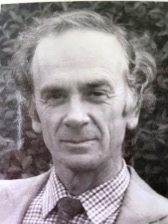
The writer, editor, and teacher David Lightfoot died in Lincoln in March 2026. He was born in Wrexham in April 1941, attended grammar school there, and went on to read Classics at the University of Wales. After graduating he taught in schools in Chester, Liverpool, Boston (Lincolnshire), and Wallasey, and for two years was an Education Officer with the Government of Kenya. Later he was awarded a Ph.D at Leicester University for a thesis on Concepts of Destiny in Virgil. His final post in education was as Deputy Headteacher at a comprehensive school in Lincoln.
Prior to this position, he had been Head of the English Department at a secondary school in Louth. He appointed me to join his department on May 7th 1975, and working as a new teacher under his guidance in the following years was a privilege and a formative experience for me.
I remember an early conversation about poetry, probably when he was helping me to plan a lesson, in which David mentioned a poem of his own. I had been unaware that he wrote, but some time later a poem of his on the subject of reaching a fortieth birthday appeared in a special edition of a local newspaper. I regret that I no longer have a copy, but the poem made such an impression on me that a particular phrase – ‘quicksilver years’ – has crossed my mind on many occasions since.
Those quicksilver years have blurred in my memory, but I recall that my wife and I borrowed chapters of a children’s novel as David completed them, and I am sure I read other pieces by him then as well. David demonstrated that writers live in the same world as other people and that writing in all its forms is for everyone, and perhaps this prompted me to ask him to look at some of my own attempts at short prose. One day he suggested that I try to turn these into poems. I remember clearly sitting with him at his family home and handing him my first serious effort at poetry. As an excellent teacher, David knew precisely how to deal with delicate situations like this, and he offered me thoughtful encouragement.
At around this time (the early 1980s, I think) David left the Louth school to take up his post in Lincoln, which meant that our daily term-time contact ceased. He did not leave town, however, and we used to meet up on Friday evenings. By this time, David had regained his poetry habit, and his work was appearing in literary magazines. We talked about our respective schools, whether Wrexham FC were doing better than Grimsby Town, and, inevitably, about writing. Somehow or other we began to write plays – that is, David would invent a character’s lines for me to respond to, and vice versa. David could type very quickly on his elderly Remington, and this enabled us to produce several sheets of new drama (with hardly any Tipp-Ex on them) by about 11.00 pm. If nothing else, the process made us laugh a lot. In fact, possibly for another laugh, we sent Early Retirement, our TV script featuring an exhausted teacher called Albert ‘Buncha’ Flowers, to the BBC. They decided against, but we enjoyed it all while it lasted.
Drained of ideas for plays, we concentrated separately on other writing and shared our latest work. David’s poetry was always finely tuned, highly accomplished in rhyme, rhythm and form, sharp, humorous, and very recognisable. His Christian faith and Biblical knowledge often played a telling part. His first poetry collection, Down Private Lanes, won the Rosemary Arthur Award in 1991, and was published in the same year. Other collections followed, and David also wrote non-fiction books on spiritual subjects during this period. His novel Winterman’s Company appeared, to critical acclaim, from Michael Blackburn’s Sunk Island Publishing in 1995. (A fuller list of his publications follows this article.)
Life imitated art when David retired in his early fifties and took up house-husbanding. On his days off he assisted Michael with editorial duties at the Sunk Island Review office in Lincoln, and expanded his writing world by giving readings at various venues locally and further afield, and by delivering occasional courses for authors. He named, and was prominent in, Wolds Words, an annual literature festival in Louth which brought several renowned writers to the town.
In 1994 David founded Seam, his own poetry magazine, with a logo in his distinctive handwriting. (Unusually, it was in A6 format – David intended it to fit into a pocket.) The Grimsby-based Irish poet Sam Gardiner was Seam’s perceptive reviewer, and I helped David as co-editor. For five years we spent quite a few of our Friday evenings sifting through A4 sheets of poems submitted by poets known and, so far, unknown. Mostly we saw eye to eye on inclusions. David was an industrious and astute editor, and numerous writers benefited from his support and advice. He arranged one-day and residential workshops under the Seam banner, which attracted both new and experienced poets from across the country. Seam ran in its original form for ten biannual issues, after which, if I remember rightly, a final agreement to transfer the entire production of the magazine to two other writers/editors was reached in a car park at the Aldeburgh Poetry Festival in autumn 1999.
David and his wife Valerie moved to another of Lincolnshire’s market towns in 2008, and he and I saw each other less often. He told me at various times that he was reading about cosmology and enjoying Robert Harris’s novels, that his current poems were written in the journal he was keeping, that he still played golf frequently, and that he regularly attended a Latin Mass at a Roman Catholic church in Scunthorpe. His health seemed to have declined when I saw him last, and Valerie told me that he was seldom leaving the house by then.
At certain points as we grow older, people come into our lives who change us for the better. David Lightfoot made a lasting difference to my life, and I am certain that he had a positive effect on others, too. Recently a former pupil of his, from his Third Year English class in 1975-76, told me how much she had respected him and had enjoyed his lessons, and that she still thinks of his teaching when she reads novels and poetry. David was a charismatic, erudite, generous man, and we are fortunate that many good memories and the wisdom in his books are still with us.
Some Publications by David Lightfoot
The Mustard Seed and The Power Struggle (writing as D J Lightfoot; Finbarr International 1988)
Your Dear Companion (writing as D J Lightfoot; Finbarr International 1990)
Water Magic (writing as James Harrison; Finbarr International 1990)
The Wonder-Working Psalms of King David (writing as James Harrison; Finbarr International 1990)
Down Private Lanes (The National Poetry Foundation 1991)
Last Round (Staple First Editions 1991)
Correcting Fluid (Crabflower Pamphlets 1993)
Winterman’s Company (Sunk Island Publishing 1995)
A Selection: Poems from Three Collections (Pikestaff Press 1996)
Wounds Heal (Rockingham Press 1996)
Last Round (slightly revised reissue: Pikestaff Press 1999)
The Pentecost Partnerships (Pikestaff Press 2004)
Rosary Sonnets (Gillick Art & Design 2004)
Intermittent Faults: Poems from a Journal (Sunk Island Publishing 2008)
May 20 2026
David Lightfoot – A tribute
David Lightfoot (1941 – 2026) – teacher, poet, novelist & editor:
some recollections by friend and colleague Rob Etty
The writer, editor, and teacher David Lightfoot died in Lincoln in March 2026. He was born in Wrexham in April 1941, attended grammar school there, and went on to read Classics at the University of Wales. After graduating he taught in schools in Chester, Liverpool, Boston (Lincolnshire), and Wallasey, and for two years was an Education Officer with the Government of Kenya. Later he was awarded a Ph.D at Leicester University for a thesis on Concepts of Destiny in Virgil. His final post in education was as Deputy Headteacher at a comprehensive school in Lincoln.
Prior to this position, he had been Head of the English Department at a secondary school in Louth. He appointed me to join his department on May 7th 1975, and working as a new teacher under his guidance in the following years was a privilege and a formative experience for me.
I remember an early conversation about poetry, probably when he was helping me to plan a lesson, in which David mentioned a poem of his own. I had been unaware that he wrote, but some time later a poem of his on the subject of reaching a fortieth birthday appeared in a special edition of a local newspaper. I regret that I no longer have a copy, but the poem made such an impression on me that a particular phrase – ‘quicksilver years’ – has crossed my mind on many occasions since.
Those quicksilver years have blurred in my memory, but I recall that my wife and I borrowed chapters of a children’s novel as David completed them, and I am sure I read other pieces by him then as well. David demonstrated that writers live in the same world as other people and that writing in all its forms is for everyone, and perhaps this prompted me to ask him to look at some of my own attempts at short prose. One day he suggested that I try to turn these into poems. I remember clearly sitting with him at his family home and handing him my first serious effort at poetry. As an excellent teacher, David knew precisely how to deal with delicate situations like this, and he offered me thoughtful encouragement.
At around this time (the early 1980s, I think) David left the Louth school to take up his post in Lincoln, which meant that our daily term-time contact ceased. He did not leave town, however, and we used to meet up on Friday evenings. By this time, David had regained his poetry habit, and his work was appearing in literary magazines. We talked about our respective schools, whether Wrexham FC were doing better than Grimsby Town, and, inevitably, about writing. Somehow or other we began to write plays – that is, David would invent a character’s lines for me to respond to, and vice versa. David could type very quickly on his elderly Remington, and this enabled us to produce several sheets of new drama (with hardly any Tipp-Ex on them) by about 11.00 pm. If nothing else, the process made us laugh a lot. In fact, possibly for another laugh, we sent Early Retirement, our TV script featuring an exhausted teacher called Albert ‘Buncha’ Flowers, to the BBC. They decided against, but we enjoyed it all while it lasted.
Drained of ideas for plays, we concentrated separately on other writing and shared our latest work. David’s poetry was always finely tuned, highly accomplished in rhyme, rhythm and form, sharp, humorous, and very recognisable. His Christian faith and Biblical knowledge often played a telling part. His first poetry collection, Down Private Lanes, won the Rosemary Arthur Award in 1991, and was published in the same year. Other collections followed, and David also wrote non-fiction books on spiritual subjects during this period. His novel Winterman’s Company appeared, to critical acclaim, from Michael Blackburn’s Sunk Island Publishing in 1995. (A fuller list of his publications follows this article.)
Life imitated art when David retired in his early fifties and took up house-husbanding. On his days off he assisted Michael with editorial duties at the Sunk Island Review office in Lincoln, and expanded his writing world by giving readings at various venues locally and further afield, and by delivering occasional courses for authors. He named, and was prominent in, Wolds Words, an annual literature festival in Louth which brought several renowned writers to the town.
In 1994 David founded Seam, his own poetry magazine, with a logo in his distinctive handwriting. (Unusually, it was in A6 format – David intended it to fit into a pocket.) The Grimsby-based Irish poet Sam Gardiner was Seam’s perceptive reviewer, and I helped David as co-editor. For five years we spent quite a few of our Friday evenings sifting through A4 sheets of poems submitted by poets known and, so far, unknown. Mostly we saw eye to eye on inclusions. David was an industrious and astute editor, and numerous writers benefited from his support and advice. He arranged one-day and residential workshops under the Seam banner, which attracted both new and experienced poets from across the country. Seam ran in its original form for ten biannual issues, after which, if I remember rightly, a final agreement to transfer the entire production of the magazine to two other writers/editors was reached in a car park at the Aldeburgh Poetry Festival in autumn 1999.
David and his wife Valerie moved to another of Lincolnshire’s market towns in 2008, and he and I saw each other less often. He told me at various times that he was reading about cosmology and enjoying Robert Harris’s novels, that his current poems were written in the journal he was keeping, that he still played golf frequently, and that he regularly attended a Latin Mass at a Roman Catholic church in Scunthorpe. His health seemed to have declined when I saw him last, and Valerie told me that he was seldom leaving the house by then.
At certain points as we grow older, people come into our lives who change us for the better. David Lightfoot made a lasting difference to my life, and I am certain that he had a positive effect on others, too. Recently a former pupil of his, from his Third Year English class in 1975-76, told me how much she had respected him and had enjoyed his lessons, and that she still thinks of his teaching when she reads novels and poetry. David was a charismatic, erudite, generous man, and we are fortunate that many good memories and the wisdom in his books are still with us.
Some Publications by David Lightfoot
The Mustard Seed and The Power Struggle (writing as D J Lightfoot; Finbarr International 1988)
Your Dear Companion (writing as D J Lightfoot; Finbarr International 1990)
Water Magic (writing as James Harrison; Finbarr International 1990)
The Wonder-Working Psalms of King David (writing as James Harrison; Finbarr International 1990)
Down Private Lanes (The National Poetry Foundation 1991)
Last Round (Staple First Editions 1991)
Correcting Fluid (Crabflower Pamphlets 1993)
Winterman’s Company (Sunk Island Publishing 1995)
A Selection: Poems from Three Collections (Pikestaff Press 1996)
Wounds Heal (Rockingham Press 1996)
Last Round (slightly revised reissue: Pikestaff Press 1999)
The Pentecost Partnerships (Pikestaff Press 2004)
Rosary Sonnets (Gillick Art & Design 2004)
Intermittent Faults: Poems from a Journal (Sunk Island Publishing 2008)