Jan 16 2026
London Grip Poetry Review – Nora Hughes
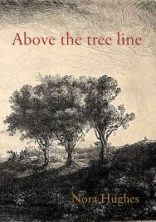
Poetry review – ABOVE THE TREELINE: Chris Beckett feels welcomed into this well-crafted and multilayered collection by Nora Hughes
Above the Treeline
Nora Hughes
Templar Poetry 2025
ISBN 978 1 911132 64 6
£12.00
First a little confession: Hughes is a great friend of mine, a fellow workshopper whom I have known for years. What this means is that I have experienced many of the poems here being born and developed. I feel a deep affection for them which is almost protective and I remember the hesitant “it’s something about…” with which Hughes often begins the making of a poem, taking her sweet time to choose each word, letting the lines slowly grow in an organic, measured process.
But despite my natural bias, I am still savvy enough to know a wonderfully evocative and moving collection when I read one! Hughes’ poems have been widely anthologised and her pamphlet Under Divis Mountain (Templar, 2020) received the iOTA SHOT award. Above the Treeline is her first full collection and possesses a truly haunting beauty of line and image, its light suggestive couplets and tercets sprinkled with unforgettable phrases that make you stop in your tracks: “the house held its breath; how deep does grief go; my mother’s many faces…. “
Hughes grew up in Belfast before she moved to London in the 1970s and the book begins with poems exploring not so much the facts of her childhood as their emotional legacy, their aftertaste. From the first poem ‘Message in a bottle’, Hughes evokes the tensions both familial and by extension political of a troubled place:
tension in the room, rising
and falling

our childish fear, an intake of breath
and the smoking fire

those days when you sang
If I were a blackbird or

I’ll take you home again Kathleen
Across the ocean wide and wild
If there are tragedies to deal with (a father’s or a grandfather’s death), they are mirrored by the cold sea, the rocks or “the stone of the street”. And a mountain called Divis, above the treeline, a looming presence both outside and inside the house of the poet’s childhood and of her poems. But there is also colour, warmth, movement; a yellow dress, a fire in the grate and a wonderfully alive community of people that includes the girl’s mother’s colleagues from the linen mill where she worked:
Ahead now, among the crowd

of spinners, weavers, stitchers, doffers
gathered at the mill door, her friends

waving and calling, and the hot life
sparks up again between them.
;
The collection moves with its poet to adulthood and London, to radiant Cavafyesque holidays in Greece where “as you dive in, the sea closes over you” (from ‘Mare Nostrum’), and evocations of a brain haemorrhage a few years ago (‘Topography of a brain’) together with a closely recorded neurological procedure (‘The Neurologist and the Radiographer’). But wherever the poet goes, her Belfast girlhood and its landscape remain at her side, sometimes as a loneliness, a “hunger in the heart” from the Irish word Cumha (in a beautiful poem of the same name); or as a Greek mountain that echoes Divis (‘Flight A3608’); or in a shocking piece of violence (‘Abuelo/Granda’):
As children, we didn’t know they’d shot him
that he died there in the street
on the stone of the street
Hughes writes this poem first in Spanish, before translating it into English, a process inspired by Jhumpa Lahiri’s book In Other Words. I must admit that the Spanish came a bit out of left field for me. I first wondered if we as readers really need to know where the poem started, especially as the language is not one which has any relation to the other poems. But I concluded that the Spanish with its rolled rs and repeated words like calle, padre, corazon, really suits this dramatic event and makes the English version appear even starker. It suggests that the poet had to step outside of herself, into another language where she is less sure of her footing, in order to write about this covered-up tragedy.
Finally, I ask myself why I love this collection so much, and recommend it so heartily? I think it has to do with the sense of a rich multilayered life being vividly conjured up, the lyrical deftness and economy of Hughes’ writing so there is plenty of room for me as a reader to settle into the poems and imagine myself there. Hughes’ greatest gift, in my eyes, is her lightness of touch, her enticing, slightly melancholy evocations of place, person or emotion. Her writing welcomes you quietly into the poems, so that each one feels like a gift. Towards the end of the book, ‘The Visit’ is a perfect example of what I mean:
sometimes
you arrive
the way

night falls
into the long
summer day

its slow
headlong descent
through the pores

of evening
to where the heart
holds on tight

holds its hunger
tight
but the heart too

is porous
and in no time
I am awash
Above the Treeline – Margo Gorman
11/06/2026 @ 15:08
[…] https://londongrip.co.uk/2026/01/london-grip-poetry-review-nora-hughes/ […]