Poetry review – BREATHING: Gareth Writer-Davies find that there is much to read between the lines of David Van-Cauter’s poetry
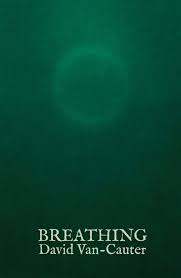 Breathing
David Van-Cauter
Arenig Press
ISBN 978-1-999849-19-1
pp 46 £7.50
Breathing
David Van-Cauter
Arenig Press
ISBN 978-1-999849-19-1
pp 46  £7.50
There are times in this collection that I want the author to scream and shout. But he is the passive observer, as life happens to him, which is the secret agent role of many poets.
Van-Cauter is always himself, imbued with a type of Englishness that doesn’t want to make visible fuss or act too swiftly and we wouldn’t have these poems of keen observation if Van-Cauter didn’t stand, or indeed sit, back whilst others take the lead. Only in extremis does he act; and then only to a stranger whose car door he has scratched.
The collection is divided into three parts, each with an illustration hinting at its contents. Part i starts with “Meerkats” those watchful mongeese, beloved by the advertising industry. Here they decorate his Mother’s dustbin:
My mother has stuck meerkats to her bins.
I ask her why.
She says because the butterflies have peeled off.
That makes sense, I reply.
The poem progresses and there is much to be sorted; the bins will be useful:
At the house, there are jobs
involving reaching things, new bulbs.

Working through each chore,
I mark it off, implore her
to remove the stains
the house is burdened with, the pain
of loss that clings to every dusty book
and stands upright, expectantly, to look.
The house is full of junk, strange DIY, cats. Dirt, dust and shit everywhere:
She exists in two states simultaneously:
then, when her son was young,
and now, when he cannot love her.

….

So he lives, for now, in her other state,
a child again, supporting her impossibility
with smiles and hope –
("The Impossible Mother")
Mother is on the decline, decisions must be made. She is not happy; neither are the cats, who mimic the mother/son dynamic:
My mother’s cats are territorial:
one guards the bottom of the steps,
the other hides in upstairs rooms,
too scared to poke her paws
anywhere near the uncastrated tom,
her jailer and protector.
("Stand-off")
Her last appearing poem is very touching:
My shrivelled mother, once my world
lies tiny in the bed, nothing left to give.

I grip her shoulder tightly,
try to retain her essence,
but I hold an echoing shell.
("The Mother Reduction")
All flesh must pass, so does Mother and there is of course the Christmas card list morphing into a checklist of who to tell:
It's time to disconnect them.
Dear Unknown, we are very sad to let you know…
 ("The Unknowns")
Thus into part ii where still touched by her absence, he is sensing his own mortality:
I have so many creams now-
drops and balms and unguents for every orifice
that never really heal anything, just cover up
the cuts and scratches we accrue.
("Cracks")
and politics enters as he wraps pulled weeds in a copy of the Mail; a visit to Swindon in “Brexit-battered Britain” does little to lift the mood:
"The hill of swine"-
the pigs responsible, elsewhere.
("After Swindon")
The house must be cleared and sold, bags taken to the tip and Van-Cauter is forced to realise that his annoyance at his Mother was part of the inevitable give and take of family dynamics:
I am too bulky for this life-
you seemed to make
this awkward shape
fit.
("House Clearance")
Part ii could easily have been a continuation of part i and I see no reason why it shouldn’t have been. The stuff of life continues (has to) even during such periods of high stress.
Part iii of this short collection are nine poems about Van-Cauter and his wife’s attempts to have a child; the death of his wife and the aftermath was the main subject of his previous collection with Arenig Press, Mirror Lake (2019).
Breathing and the effort to do sodominate as precious IVF material is stuck in a traffic jam and full stops are small lives that do not go to term:
We are buoyant – first scan, six weeks.
In the waiting room, I am all smiles,
but you know, somehow.

When the nurse finds nothing, you start to cry.
I hear the words ectopic,
emergency, the baby will be lost.

 Alone by Sainsbury’s, I jerk open the door,
scratch the neighbouring car. I slump
over the wheel – you cannot see me like this.

A tap, tap, tap at the window,
like a needle being flicked
before injection.

An old man points at his paintwork.
I cannot speak.
He taps again, will not let go.

I wind the window down and in one breath
tell him everything. If he replies
I do not hear. I drive away.
("August 2nd")
A service with the smallest coffin they make and an anniversary where the not to be Mother and not to be Father are at cross purposes:
– a would-be date
when our ghost-child is born.
I didn’t know

and, in my bubble,
arranged to go away without you.

When I told you,
real anger:
How could you even think…
                                       ("March 8th")
The poems have a similar mood from first to last, as they breathe in and breathe out. But as the novelist Janice Galloway has it “the trick is to keep breathing” And with an optimism that things will get better the final poem “Chasing Sunsets”:
The air outside is alien –
we breathe familiar songs,
the dust of home,

as we chase sunsets,
trying to catch the final rays
in a tiny metal box,

reaching out for the reddening.
So pretty, you say,
these endings.
This is not a book wherein startling metaphors and thunderous declarations burst from the pages. These poems describe gently and patiently the challenges which are met in suburbs and small towns and with which most readers will be familiar. It’s relatable work. Read the lines and then read what’s written between them.
London Grip Poetry Review – David Van-Cauter
Poetry review – BREATHING: Gareth Writer-Davies find that there is much to read between the lines of David Van-Cauter’s poetry
There are times in this collection that I want the author to scream and shout. But he is the passive observer, as life happens to him, which is the secret agent role of many poets.
Van-Cauter is always himself, imbued with a type of Englishness that doesn’t want to make visible fuss or act too swiftly and we wouldn’t have these poems of keen observation if Van-Cauter didn’t stand, or indeed sit, back whilst others take the lead. Only in extremis does he act; and then only to a stranger whose car door he has scratched.
The collection is divided into three parts, each with an illustration hinting at its contents. Part i starts with “Meerkats” those watchful mongeese, beloved by the advertising industry. Here they decorate his Mother’s dustbin:
The poem progresses and there is much to be sorted; the bins will be useful:
The house is full of junk, strange DIY, cats. Dirt, dust and shit everywhere:
She exists in two states simultaneously: then, when her son was young, and now, when he cannot love her. …. So he lives, for now, in her other state, a child again, supporting her impossibility with smiles and hope – ("The Impossible Mother")Mother is on the decline, decisions must be made. She is not happy; neither are the cats, who mimic the mother/son dynamic:
My mother’s cats are territorial: one guards the bottom of the steps, the other hides in upstairs rooms, too scared to poke her paws anywhere near the uncastrated tom, her jailer and protector. ("Stand-off")Her last appearing poem is very touching:
My shrivelled mother, once my world lies tiny in the bed, nothing left to give. I grip her shoulder tightly, try to retain her essence, but I hold an echoing shell. ("The Mother Reduction")All flesh must pass, so does Mother and there is of course the Christmas card list morphing into a checklist of who to tell:
It's time to disconnect them. Dear Unknown, we are very sad to let you know… ("The Unknowns")Thus into part ii where still touched by her absence, he is sensing his own mortality:
I have so many creams now- drops and balms and unguents for every orifice that never really heal anything, just cover up the cuts and scratches we accrue. ("Cracks")and politics enters as he wraps pulled weeds in a copy of the Mail; a visit to Swindon in “Brexit-battered Britain” does little to lift the mood:
"The hill of swine"- the pigs responsible, elsewhere. ("After Swindon")The house must be cleared and sold, bags taken to the tip and Van-Cauter is forced to realise that his annoyance at his Mother was part of the inevitable give and take of family dynamics:
I am too bulky for this life- you seemed to make this awkward shape fit. ("House Clearance")Part ii could easily have been a continuation of part i and I see no reason why it shouldn’t have been. The stuff of life continues (has to) even during such periods of high stress.
Part iii of this short collection are nine poems about Van-Cauter and his wife’s attempts to have a child; the death of his wife and the aftermath was the main subject of his previous collection with Arenig Press, Mirror Lake (2019).
Breathing and the effort to do sodominate as precious IVF material is stuck in a traffic jam and full stops are small lives that do not go to term:
We are buoyant – first scan, six weeks. In the waiting room, I am all smiles, but you know, somehow. When the nurse finds nothing, you start to cry. I hear the words ectopic, emergency, the baby will be lost. Alone by Sainsbury’s, I jerk open the door, scratch the neighbouring car. I slump over the wheel – you cannot see me like this. A tap, tap, tap at the window, like a needle being flicked before injection. An old man points at his paintwork. I cannot speak. He taps again, will not let go. I wind the window down and in one breath tell him everything. If he replies I do not hear. I drive away. ("August 2nd")A service with the smallest coffin they make and an anniversary where the not to be Mother and not to be Father are at cross purposes:
– a would-be date when our ghost-child is born. I didn’t know and, in my bubble, arranged to go away without you. When I told you, real anger: How could you even think… ("March 8th")The poems have a similar mood from first to last, as they breathe in and breathe out. But as the novelist Janice Galloway has it “the trick is to keep breathing” And with an optimism that things will get better the final poem “Chasing Sunsets”:
This is not a book wherein startling metaphors and thunderous declarations burst from the pages. These poems describe gently and patiently the challenges which are met in suburbs and small towns and with which most readers will be familiar. It’s relatable work. Read the lines and then read what’s written between them.