Poetry review – FIFTY POEMS: Ian Pople considers Geoffrey Lehmann’s new translations of poems by Rainer Maria Rilke
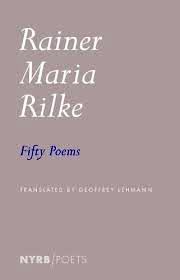 Fifty Poems
Rainer Maria Rilke, trans. Geoffrey Lehmann
NYRB Poets 2025
ISBN 9781681379944
£14.99
Fifty Poems
Rainer Maria Rilke, trans. Geoffrey Lehmann
NYRB Poets 2025
ISBN 9781681379944
£14.99
Thoman Pfau’s comment that ‘Rilke’s impact on the generation of writers reshaping philosophy and theology during the interwar years is arguably without parallel’ is almost a commonplace when discussing Rilke. And Pfau goes on to list some of those who have written about Rilke: ‘Hans Urs von Balthasar, Hans-Georg Gadamer, Maurice Blanchot and, of course, Martin Heidegger,’ a group of some of the finest minds of the twentieth century. But it was not only the intellectuals who fixed on Rilke. Judith Ryan in Rilke, Modernism and Tradition comments that, ‘[Rilke] was disturbed by all the young people who wrote to him for advice about the conduct of their personal lives. German-speaking soldiers took his Cornet into the First World War, and his Duino Elegies into the Second. Even today, many readers of Rilke’s writing feel it speaks directly to them. Still, it would be wrong to think of Rilke’s works as a self-help manual in disguise.’ However, a quick visit to Wikipedia’s entry on Rilke might make you think otherwise; Rilke’s virtues as ‘self-help guru,’ are much touted on their Rilke page.
Rilke, himself, was fully aware of how the wellsprings of his poetry could reach out. In a letter from 1914, he wrote that his poetry was an attempt to answer the question of, ‘How is it possible to live, considering that the elements of this life are wholly unfathomable to us? Since we are forever inadequate in love, uncertain when choosing, and paralyzed in the face of death, how is it possible to exist?’
Geoffrey Lehmann in this new selection of Rilke for the NYRB Poets imprint has taken the conscious decision to translate only poems from Rilke’s volume, New Poems, from 1907. That book was published some seven years before the pronouncement on the themes of his poetry, I have quoted above, and fourteen years before the appearance of the Duino Elegies and Sonnets to Orpheus that have usually been seen as the height of Rilke’s achievement. Part of the reason for that choice is, perhaps, in a comment from Michael Hoffmann quoted on the back cover of this book and which Lehmann discusses in his Afterword. Hoffman has written ‘The New Poems are for me Rilke’s greatest poems. […] They are “method” poems Not waiting for inspiration, but taking the handicraft of a poem, and setting himself subjects, the way a shoemaker might, or a sculptor. “Thing poems,” Dinggedicte, poems about things, but also poems that are “a thing”.’ It should be noted that the terms, ‘“Thing poems,” Dinggedicte’ are Rilke’s own.
It is that sense of an attempt to write about things that interested Martin Heidegger in the branch of philosophy known as ‘phenomenology.’ Phenomenology is sometimes defined as ‘the study of the structure of appearance or phenomena;’ that ‘thingness’ that Michael Hoffmann picks out in Rilke’s New Poems. Thus, the poems in this fine book include poems that are sometimes known as Rilke’s ‘zoo’ poems, for example, the very famous “The Gazelle” and “The Panther.” This latter prefigures by some fifty years, Ted Hughes’ “Jaguar,” a poem about a similar animal in a similar setting. But where Hughes’ jaguar is seen as ignoring his cage, ‘his stride is wildernesses of freedom,’ for Rilke’s panther,
Backwards and forwards in his cage, his gaze
is so fatigued there’s nothing it can hold.
For him there are a thousand bars, always
the same bars and beyond the bars no world.
We might consider that in his need to reach into the subject of the poem, Rilke’s own gaze has actually prefigured much of our contemporary attitude to caged animals and rejected Hughes’ possibly naïve view of the jaguar. We might also think that Rilke has avoided the trap of appropriating the panther for his own view of what an animal might mean. At the same time, Rilke like Hughes, can project a meaning onto the animal’s own gaze. Where Hughes has the jaguar ‘hurrying enraged / Through prison darkness after the drills of his eyes,’ Rilke finishes his poem with this stanza,
But sometimes the pupil’s shutter flicks up
mutely-. An image entering through the eyes
travels through tense limbs, coming to a stop
in the immobile heart, and dies.
Others, writing from a more philosophical point of view, are more sympathetic to Rilke’s project and have seen “The Panther” as a prime example of the phenomenology mentioned earlier. For Jennifer Gosetti-Ferencei, “The Panther” is ‘an empathetic evocation of the inner life of the panther, and then a radicalization of this empathy such that the observer is swallowed up by what is seen. The subject-speaker is no longer distinguishable from object described.’ This could also be said of Hughes, of course, with his own radical empathy with the natural world. However, it is this kind of gaze and psychological and philosophical engagement emerging so early in the twentieth century that has, in part, given Rilke his status.
It is that status, and possibly the challenge of translating Rilke’s German and French into English that has drawn a myriad translators to Rilke; from the early translations of J.B. Leishman and Stephen Spender, through to Stephen Mitchell, Ian Crockatt and this translation under review. And when I said above that Rilke finished “The Panther” in that way, it is, of course, the translator, Geoffrey Lehmann who has finished the poem. Lehmann, like many of the translators of Rilke’s more formal poems has consciously chosen to replicate Rilke’s construction. Lehmann uses rhyme and, in “The Panther,” but throughout this volume, Lehmann’s translations have a rhythmic vitality and attention.
Rilke was, for a time, the secretary of the sculptor Rodin. He wrote a book on Rodin and also wrote about Cezanne; another artist who is a focus for phenomenology. For Rilke, it was Cezanne’s relentless striving to paint the essence of things that influenced his own work. Lehmann includes Rilke’s important “Archaic Torso of Apollo” in this selection. We might see this poem as an example of what Michael Hoffmann calls Rilke’s ‘taking the handicraft of a poem and setting himself subjects.’ Here, Rilke is taking himself off to the Louvre and gazing at a classical sculpture as though taking part in a sketching class. This is Lehmann’s opening stanza;
The eyeballs ripening in the unheard-of head
do not see us, are things we cannot know,
but the hacked torso has an inner glow
where the god’s gaze, subdued, lives on instead

and shines.
This is Stephen Mitchell’s version:
We cannot know his legendary head
with eyes like ripening fruit. And yet his torso
is still suffused with brilliance from inside,
like a lamp, in which his gaze, now turned to low,

gleams in all its power.
We might think that the Mitchell has a certain concise punchiness that the Lehmann lacks. Lehmann also introduces the words, ‘do not see us,’ and ‘instead,’ which emphasise the agency of the god in ways that Mitchell’s version does not. For Gosetti-Ferencei, Rilke’s poetry works by ‘intuiting the hidden intimacy of “external” things, since external things model for Rilke a form of inwardness or inner landscape.’ And, in his version, Lehmann could be seen as moving the reader towards that inwardness.
This collection of fifty of Rilke’s finest poems also contains a selection of Rilke’s seeming depictions of religious paintings, although he, himself, was resolutely anti-religious. Also included are more of Rilke’s other ‘Thing poems.’ It is a concise, bilingual edition whose translations have much to recommend them.
Dec 1 2025
London Grip Poetry Review – new translations of Rilke poems by Geoffrey Lehmann
Poetry review – FIFTY POEMS: Ian Pople considers Geoffrey Lehmann’s new translations of poems by Rainer Maria Rilke
Thoman Pfau’s comment that ‘Rilke’s impact on the generation of writers reshaping philosophy and theology during the interwar years is arguably without parallel’ is almost a commonplace when discussing Rilke. And Pfau goes on to list some of those who have written about Rilke: ‘Hans Urs von Balthasar, Hans-Georg Gadamer, Maurice Blanchot and, of course, Martin Heidegger,’ a group of some of the finest minds of the twentieth century. But it was not only the intellectuals who fixed on Rilke. Judith Ryan in Rilke, Modernism and Tradition comments that, ‘[Rilke] was disturbed by all the young people who wrote to him for advice about the conduct of their personal lives. German-speaking soldiers took his Cornet into the First World War, and his Duino Elegies into the Second. Even today, many readers of Rilke’s writing feel it speaks directly to them. Still, it would be wrong to think of Rilke’s works as a self-help manual in disguise.’ However, a quick visit to Wikipedia’s entry on Rilke might make you think otherwise; Rilke’s virtues as ‘self-help guru,’ are much touted on their Rilke page.
Rilke, himself, was fully aware of how the wellsprings of his poetry could reach out. In a letter from 1914, he wrote that his poetry was an attempt to answer the question of, ‘How is it possible to live, considering that the elements of this life are wholly unfathomable to us? Since we are forever inadequate in love, uncertain when choosing, and paralyzed in the face of death, how is it possible to exist?’
Geoffrey Lehmann in this new selection of Rilke for the NYRB Poets imprint has taken the conscious decision to translate only poems from Rilke’s volume, New Poems, from 1907. That book was published some seven years before the pronouncement on the themes of his poetry, I have quoted above, and fourteen years before the appearance of the Duino Elegies and Sonnets to Orpheus that have usually been seen as the height of Rilke’s achievement. Part of the reason for that choice is, perhaps, in a comment from Michael Hoffmann quoted on the back cover of this book and which Lehmann discusses in his Afterword. Hoffman has written ‘The New Poems are for me Rilke’s greatest poems. […] They are “method” poems Not waiting for inspiration, but taking the handicraft of a poem, and setting himself subjects, the way a shoemaker might, or a sculptor. “Thing poems,” Dinggedicte, poems about things, but also poems that are “a thing”.’ It should be noted that the terms, ‘“Thing poems,” Dinggedicte’ are Rilke’s own.
It is that sense of an attempt to write about things that interested Martin Heidegger in the branch of philosophy known as ‘phenomenology.’ Phenomenology is sometimes defined as ‘the study of the structure of appearance or phenomena;’ that ‘thingness’ that Michael Hoffmann picks out in Rilke’s New Poems. Thus, the poems in this fine book include poems that are sometimes known as Rilke’s ‘zoo’ poems, for example, the very famous “The Gazelle” and “The Panther.” This latter prefigures by some fifty years, Ted Hughes’ “Jaguar,” a poem about a similar animal in a similar setting. But where Hughes’ jaguar is seen as ignoring his cage, ‘his stride is wildernesses of freedom,’ for Rilke’s panther,
We might consider that in his need to reach into the subject of the poem, Rilke’s own gaze has actually prefigured much of our contemporary attitude to caged animals and rejected Hughes’ possibly naïve view of the jaguar. We might also think that Rilke has avoided the trap of appropriating the panther for his own view of what an animal might mean. At the same time, Rilke like Hughes, can project a meaning onto the animal’s own gaze. Where Hughes has the jaguar ‘hurrying enraged / Through prison darkness after the drills of his eyes,’ Rilke finishes his poem with this stanza,
Others, writing from a more philosophical point of view, are more sympathetic to Rilke’s project and have seen “The Panther” as a prime example of the phenomenology mentioned earlier. For Jennifer Gosetti-Ferencei, “The Panther” is ‘an empathetic evocation of the inner life of the panther, and then a radicalization of this empathy such that the observer is swallowed up by what is seen. The subject-speaker is no longer distinguishable from object described.’ This could also be said of Hughes, of course, with his own radical empathy with the natural world. However, it is this kind of gaze and psychological and philosophical engagement emerging so early in the twentieth century that has, in part, given Rilke his status.
It is that status, and possibly the challenge of translating Rilke’s German and French into English that has drawn a myriad translators to Rilke; from the early translations of J.B. Leishman and Stephen Spender, through to Stephen Mitchell, Ian Crockatt and this translation under review. And when I said above that Rilke finished “The Panther” in that way, it is, of course, the translator, Geoffrey Lehmann who has finished the poem. Lehmann, like many of the translators of Rilke’s more formal poems has consciously chosen to replicate Rilke’s construction. Lehmann uses rhyme and, in “The Panther,” but throughout this volume, Lehmann’s translations have a rhythmic vitality and attention.
Rilke was, for a time, the secretary of the sculptor Rodin. He wrote a book on Rodin and also wrote about Cezanne; another artist who is a focus for phenomenology. For Rilke, it was Cezanne’s relentless striving to paint the essence of things that influenced his own work. Lehmann includes Rilke’s important “Archaic Torso of Apollo” in this selection. We might see this poem as an example of what Michael Hoffmann calls Rilke’s ‘taking the handicraft of a poem and setting himself subjects.’ Here, Rilke is taking himself off to the Louvre and gazing at a classical sculpture as though taking part in a sketching class. This is Lehmann’s opening stanza;
This is Stephen Mitchell’s version:
We might think that the Mitchell has a certain concise punchiness that the Lehmann lacks. Lehmann also introduces the words, ‘do not see us,’ and ‘instead,’ which emphasise the agency of the god in ways that Mitchell’s version does not. For Gosetti-Ferencei, Rilke’s poetry works by ‘intuiting the hidden intimacy of “external” things, since external things model for Rilke a form of inwardness or inner landscape.’ And, in his version, Lehmann could be seen as moving the reader towards that inwardness.
This collection of fifty of Rilke’s finest poems also contains a selection of Rilke’s seeming depictions of religious paintings, although he, himself, was resolutely anti-religious. Also included are more of Rilke’s other ‘Thing poems.’ It is a concise, bilingual edition whose translations have much to recommend them.