*
ISSUE 58 of LONDON GRIP NEW POETRY features poems by:
*Michael Carrino *James Croal Jackson *David Lewitzky *John Grey
*Anne Eyries *Merryn Williams *Andrew Shields *John Whitehouse
*Jim Murdoch *Julie-Ann Rowell *Kathryn Southworth *Michael Loveday
*Kathleen Bell *Jill Sharp *David Dumouriez *Michael Klimeš
*Christine McNeill *Caleb Murdock *Pam Job *Solape Adetutu Adeyemi
*Brian Kirk *Jane Simpson *Emma-Jane Peterson *Angela Bailey
*Charlotte Gann *Ross Jackson *Rodney Wood *Rosemary Norman
*Carol DeVaughn *Rosalind Adam *Rachael Clyne *Clifford Liles
*Marjorie Sweetko *Lawrence Bradby *Alessandro Merendino *Lydia Unsworth
*Sue Norton *Nuala O’Farrell *Deborah Tyler-Bennett *David Bernard
*Jim C Wilson *Lee Fraser *Thomas Ovans *John Bartlett *Alwyn Marriage
Contributor Biographies and Editor’s Notes are also included.
Copyright of all poems remains with the contributors
A printable version of this issue can be found at LG New Poetry Winter 2025-26
London Grip New Poetry appears early in March, June, September & December
SUBMISSION GUIDELINES:
Send up to THREE poems & a brief bio to poetry@londongrip.co.uk
Poems should be in a SINGLE Word attachment or included in the message body
Our submission windows are January, April, June & October
Please do not include us in simultaneous submissions
*
Editor’s notes
As another year draws to an end, we wish all our readers a very happy Christmas and good prospects for 2026.
In fact, Christmas is mentioned in only a handful of the poems in this issue but an appreciation of – or more commonly a longing for – the seasonal feelings of peace and goodwill can be detected more widely. Is it over-pessimistic to observe that those commodities are in even shorter supply this year? Or does that gloomy view arise because of the confrontational nature of politics as amplified in much or our media? Perhaps at the local and personal level we can still manage to deal with one another more generously. Our closing poem seeks to highlight one rather small, very local but delightfully surprising glimpse of hope as it describes a Vigil for Peace sustained by young people in Guildford. May their candle flames become part of a spreading fire.
As is too often the case, we are obliged to mention the deaths of some prominent poets over the three months since out last posting. Two of them who enjoyed national and international reputations, well summarised in Guardian obituaries are Brian Patten and Tony Harrison. A third, John Lucas, had perhaps a lower profile as a poet; but he made up for that by being also a novelist, academic, editor, reviewer and publisher. He has not yet been granted a Guardian obituary but will nevertheless be well known to London Grip readers for the thoughtful and entertaining book reviews he contributed over the last decade or so. Furthermore many of our contributors over the years have had collections published (and perceptively edited) by him at Shoestring Press. John’s own last book was The Moon Shines on Them All, a collection of essays celebrating some memorable friendships across the whole span of a well-lived life. It seems a very fitting closing word from a warm-hearted and generous man.
Michael Bartholomew-Biggs
London Grip poetry editor
Back to poet list… Forward to first poet
.
.
.
.
.
.
.
.
.
.
.
.
.
.
.
.
.
***
Michael Carrino: Downtown on Bridge Street
  -after visiting the friend I've exchanged letters with for some time now,
   it will be time to return to Canada. Montreal now, then I'm not sure.
                                                                    —from Alvy's journal

Harsh treble in some instrument has pushed me out of Fillion's
river level door. As it slams behind me I watch
the Saranac roil, gaze at dark, empty sky.
I find the stone steps, climb to the sidewalk, until
the river hisses under me. I'm surprised I'm not
wearing shoes. Fillion's has been empty, silent
all these years. My feet must be bleeding, but the sidewalk
turns to clean white sand, and further ahead
a long beach. Lake Champlain is an ocean
dappled by moonlight. It seems I must

slip into the rough waves, find my shoes, where I left
my suitcase, and try to inquire
at the Egg and the Machine Shop how I missed
seeing the train station, my favorite
downtown building, and when the next bus
to Montreal will depart. There has been no bus depot
downtown, for a long time. The Egg a hazy
memory. I have misplaced
my watch. I'm sure it can't be much
after midnight. Maybe a later piece of morning.

Anyway, I'm sitting at a table in Indigo Books writing
you a letter, sipping black coffee, while
listening to someone play “Misty” on the piano.
I'm glad Indigo has this piano. Anyone can sit down
if inclined, and play freely and for free. I'm glad
we still exchange letters after all these years.
I'm writing to mention what seemed to take place
after my visit last week. Strange trip...
So it goes. Montreal now, then
I'm not sure. I stole
that last bit from my writing journal. It's quite helpful.

I'm stealing more lines from the journal
hopefully for a new poem
I'll send with this letter or the next.
Take care. Oh, and please
go downtown and find the train station, the tracks,
especially if the rails are gleaming in mid-day sunlight,
waiting for a train that will take anyone south
through the Adirondacks, or north across the border. I breathe
more easy lately when the train crosses the border.
Back to poet list… Forward to next poet
.
.
.
.
.
.
.
.
.
.
.
.
.
.
.
.
.
***
James Croal Jackson: Poem That Begins with Unfinished Business

There is a limit to what I want you to tell me. Closing
the stage on a Friday night, you text me to say that
a stench of weed has permeated the bar set. Grips

and Electrics are last out, first to party over sets
they consider their own. If only it were otherwise–
had I instead been the one to open up our relationship

in the brightest winter, the darkest season of my depression.
I’m sorry. I am no longer speaking of work. I am
thinking of your other lover laughing when you discover

her uncle has a vibrating bed and you are staying
there tonight. I am having trouble even making eye
contact with other folks I care about at what has been

our favorite bar. I went to the dentist and my
extracted space of tooth hurts, still, days later,
the trench of gum, the pipeline to my heart.
Back to poet list… Forward to next poet
.
.
.
.
.
.
.
.
.
.
.
.
.
.
.
.
.
***
David Lewitzky: Two Ladies
For Julie and Carrie

In a bistro on the Elmwood strip
Two ladies lunch together
My wife, her lover

They talk about art
They talk about their children
They’ve loved each other long, so long
No need to talk about their situation

How solid, how intense they are
How close and intimate
How still they are
Like pitchblende, amber

Two ladies who
Like polished tree rings in a table
And like me
Flourish after tragedy

I lie suspended in the soreness of their beauty
Back to poet list… Forward to next poet
.
.
.
.
.
.
.
.
.
.
.
.
.
.
.
.
.
***
John Grey: No, Of Course Not

One evening, as we’re in the parlor,
you knitting, me reading,

you ask, out of nowhere,
if I’ve seen Christine lately.

I say something like, “No.
Of course not.”

You go on wielding your needles
though the doubt in your expression

is as palpable as the color blue that
weaves its way into your every skein.

“Why bring her up?” I ask.
You laugh. I don’t see the joke.

“Want to see what’s on TV?” I say.
Maybe if we do something together,

Christine will go the way of your prom date, Eddie.
I haven’t resuscitated his name in years.

But an ex is different. An ex once wore
a diamond, the hardest substance on earth.
Back to poet list… Forward to next poet
.
.
.
.
.
.
.
.
.
.
.
.
.
.
.
.
.
***
Anne Eyries: Monochrome

Believe me, I didn’t mean to mention
my husband, but you remind me

how he stacked his hats –
Stetson, Borsalino, Fedora

like the one worn by Indiana Jones;
remind me of his records

though he’d never leave them flat –
vinyl always vertical, covers on show;

remind me of him buying steak
thick as two fingers held out

like a gun (he could grill to perfection,
choice cuts seared and tender); remind me

how his world was black or white,
mostly black and half empty

unless full of rage – how he kept me
spinning for everything and nothing.
Back to poet list… Forward to next poet
.
.
.
.
.
.
.
.
.
.
.
.
.
.
.
.
.
***
Merryn Williams: That Was In Another Country

Sorry to hear of your divorce.  But glad
it wasn’t me you married.  This came up in
my book group;  someone from another town
mentioned your name, and shockingly, years later,
I was reminded of that brief disastrous
relationship.  But I stayed silent, didn’t
tell them I knew you, knew much more than they did.
(‘Like Angel Clare, blew hot, blew cold’, joked someone,
and all laughed).  But I thought of that young woman
I never met, and of her children, and how
she panicked, and fell gasping to the floor
half-conscious, when she saw you really meant it.
Back to poet list… Forward to next poet
.
.
.
.
.
.
.
.
.
.
.
.
.
.
.
.
.
***
Andrew Shields: A Man Too Soon

It was just a man too soon.
I found him and then found you.

No longer did I want to wait.
I found him first, and you too late.

There was someone back in school,
but I tried to be too cool.

And in the dry years in between,
I found no-one; no-one found me.

And when I'd finally given up,
a blind date seemed to change my luck.

A man who finally seemed to be
the one who wanted to find me.

First came sex, then came love,
then came the baby I'd dreamed of.

But then your pram ran into mine
out in the park; the day was fine.

Or did my pram run into yours?
Was it his? Was it hers?

The bubble of my love has burst.
How I wish I'd met you first.

It was just a man too soon.
I found him and then found you.

No longer did I want to wait.
I found him first, and you too late.
Back to poet list… Forward to next poet
.
.
.
.
.
.
.
.
.
.
.
.
.
.
.
.
.
***
John Whitehouse: Four Camargue chairs

I didn’t see the young couple - my wife dealt with the sale.
Four Camargue chairs, rattan seats, painted a deep turquoise green.

I imagine the colour of their eyes, and could tell without meeting them,
they were in love. Their sweet voices carried, drifting

up to my room. I stopped typing, listened to the girl’s lilting voice,
visualised her extravagant nature. She was the reason they were here.

The future means nothing to them. Their guileless hearts beat on.
No break-up, no reconstruction of the past, like an archaeological dig.

I would have given them the chairs gladly. But they were already gone,
their voices thinning in the blare of city noise.

I didn’t go after them or call them. I must have known their vision is flawless.
They can see for miles and miles. How it will all end.
Back to poet list… Forward to next poet
.
.
.
.
.
.
.
.
.
.
.
.
.
.
.
.
.
***
Jim Murdoch: What Remains
[L]ove isn’t stronger than death just because two statues
hold hands for six hundred years
             –  Philip Larkin (note on early draft of An Arundel Tomb)

People misquote him all the time.
Not the line about mums and dads—
he absofuckinlutely nailed that one—
the uncharacteristic one about love.

They replace survives with remains.
A more Larkinesque choice redolent
of corpses and decay and apropos.
The remains of love remain. Better.

If it does somehow survive intact
love survives because it devours.
Love conquers all, someone said,
and, yes, the conquerors survive

to romanticise the past any way
they goddamn please.
Back to poet list… Forward to next poet
.
.
.
.
.
.
.
.
.
.
.
.
.
.
.
.
.
***
 Julie-Ann Rowell: Newsworthy
I can’t say I like it, or whether you would.
It’s made you look too debonair, and I’m reminded
you said, statues just spoil a good view.
Now you’re outside the BBC (or the girl’s school,
lunatic asylum), you despaired of, so views
aren’t in it, standing proud and admonishing
with cigarette in hand the people who shape our news.
You said news doesn’t need to be popular,
it’s not a contest to impress or seduce unless
you’re a dictator. Is anyone listening,
paying any attention, as they scramble by
on their way to the stuffy studios
you loathed (hence Room 101)? I love
the sweet way you cared for your adopted son.
I hate that you died so young. (Put out that
bloody cigarette!) I wonder what you’d
make of ‘fake news’. Laugh, I guess.
You promised truth and strived for it.
I think you did your best. I bet
you didn’t want a statue, but at least
it’s animated, leaning forward
as if to ask an awkward question
of those who linger at your feet,
the new generation of smokers
trying to go unnoticed.
A statue of George Orwell (Eric Blair) by the British sculptor Martin Jennings, was installed
Julie-Ann Rowell: Newsworthy

I can’t say I like it, or whether you would.
It’s made you look too debonair, and I’m reminded
you said, statues just spoil a good view.
Now you’re outside the BBC (or the girl’s school,
lunatic asylum), you despaired of,  so views
aren’t in it, standing proud and admonishing
with cigarette in hand the people who shape our news.

You said news doesn’t need to be popular,
it’s not a contest to impress or seduce unless
you’re a dictator. Is anyone listening,
paying any attention, as they scramble by
on their way to the stuffy studios
you loathed (hence Room 101)? I love
the sweet way you cared for your adopted son.
I hate that you died so young. (Put out that
bloody cigarette!) I wonder what you’d
make of ‘fake news’. Laugh, I guess.

You promised truth and strived for it.
I think you did your best. I bet
you didn’t want a statue, but at least
it’s animated, leaning forward
as if to ask an awkward question
of those who linger at your feet,
the new generation of smokers
trying to go unnoticed.

A statue of George Orwell (Eric Blair) by the British sculptor Martin Jennings, was installed
in November 2017 outside Broadcasting House, the headquarters of the BBC, in London.
Back to poet list… Forward to next poet
.
.
.
.
.
.
.
.
.
.
.
.
.
.
.
.
.
***
Kathryn Southworth: Think on
i.m. Tony Harrison

When dad died, all I could think of was my mum
sitting outside the ward on a hard chair
while I did what was expected to be done
and read psalm twenty three beside his body to thin air.

There might be a time one day to think of him
but somehow the right moment never came.
Even his ashes, kept in an elaborate gold tin,
got lost in some house clearance – pretty lame.

And even then, it was what mum would think
that bothered me, after her years of clinging on
to those cherished remains, all gone down some sink.
Any road up, it’s been and gone and done.

Except – I always thought I favoured mum in every way
soldiering on for years, no matter what,
but now I’m looking more like him with every day,
I’ve thought again  – and bought a burial plot.


Kathryn Southworth: The return

And when they started to come home
buddleia was sprouting in the broken roads,
the dust of former houses choked their eyes,
the thirst of hope caught racking in their throats.

The sun still shone – it had no shade of shame –
the rain still fell – it felt no pity after all;
the wind was bitter – without trace of salt,
salt was what the sea had taken long ago.
Back to poet list… Forward to next poet
.
.
.
.
.
.
.
.
.
.
.
.
.
.
.
.
.
***
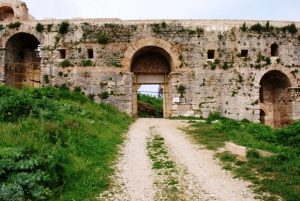 Michael Loveday: Ruin at Nicópolis
Edward Lear, 1st May 1849
broken brickwork scattered over
the soil a mass of rubble pillars smashed
and obstacles arisen with the spring:
asphodel swollen five feet high stubborn briars
foxgloves swooning in glamorous enchantments
they block my view of the lonely Ionian sea
passing from one patch of collapsed theatre
to another means crossing snake-infested fields
of Indian corn where the sun
seethes and glares and to stay is slippage
into tangled heats of fever so much destruction
Alí Pashá inflicted on Augustus’s great monument
each splintered column makes itself
known as loss each moment keeps
stretching into another filled with longing
and columns redoubling with me
In September 1848, the landscape painter and poet Edward Lear sailed from
Michael Loveday: Ruin at Nicópolis
Edward Lear, 1st May 1849

broken brickwork      scattered over
the soil a mass of rubble      pillars smashed

and obstacles arisen      with the spring:
asphodel swollen five feet high      stubborn briars

foxgloves swooning      in glamorous enchantments
they block my view      of the lonely Ionian sea

passing from one patch      of collapsed theatre
to another means crossing      snake-infested fields

of Indian corn      where the sun
seethes and glares      and to stay is slippage

into tangled heats of fever      so much destruction
Alí Pashá inflicted      on Augustus’s great monument

each splintered      column makes itself
known as loss      each moment keeps

stretching into another      filled with longing
and columns      redoubling with me

In September 1848, the landscape painter and poet Edward Lear sailed from
Constantinople to Saloníki (now Thessaloniki) in Northeast Greece, in order to embark
upon a tour of southeastern Europe with a friend. A cholera outbreak blocked his
onward route. Lear decided to travel, accompanied by a local guide, into Ottoman-
ruled Albania, at that time a territory ravaged by conflict. He continued onwards into
Greece before finally completing his journey in the summer of 1849. His journals and
lithographs were later published as one of the most celebrated travel books of the 19th
century: Journals of a Landscape Painter in Albania, &c. (1851).
Back to poet list… Forward to next poet
.
.
.
.
.
.
.
.
.
.
.
.
.
.
.
.
.
***
Kathleen Bell: A Wakening

So, on a day, doors swing
and crack their locks, a wall
crumbles to fragments, masters
leave and we, the people,
so suddenly set free
can love, hope, buy or rob,
welcome or spurn desire,
rampage through buses, trams,
trains, ships, cars, homes
and flood the world with wine.
We drink – from bottles, cans,
teacups, our hands, our neigbours’ hands
and learn at speed the dance
of dreams unfettered,
dread choked and hope
acted upon until there’s no
resistance, there’s no need
for anything but bodies, limbs
that reach for more, and more …
At last we fall replete and dazed,
stuffed full of hope,
to dream, and dream, and dream.
Then comes the smack
of master’s hand. Walls
re-erect. Doors clang
and sprout new locks.
Back to poet list… Forward to next poet
.
.
.
.
.
.
.
.
.
.
.
.
.
.
.
.
.
***
Jill Sharp: King Midas’ barber: uncut

The king has ass’s ears!
   I’ve seen them
but I’m not allowed to say.

The people bow to him
   and he has ass’s ears!
The laws are made by him
   and he has ass’s ears!

He told me they’re a punishment
   from Apollo –
for preferring Pan’s music to his.
   A likely story.
But I’m not allowed to say.

A bee is free to signal
   to the hive,
a bird to sing, a dog
   to howl its pain.
But I must see and think and feel
   and hold my tongue.

My lips are sealed as if with tape,
   my fingers bound,
so I cannot reveal those
   ass’s ears.

Forced silence makes the pulses race,
   the hot blood boil.
Frantic, I dig a hollow in the earth,
      murmur in her ear,
fill back the soil.

Now new-grown grasses whisper
   on the breeze
ass’s ears    ass’s ears

Blue lights are flashing in my street.
A fist is pounding on my door.
Back to poet list… Forward to next poet
.
.
.
.
.
.
.
.
.
.
.
.
.
.
.
.
.
***
David Dumouriez: The Day They Took Grandmother Away
Istanbul, 2025

The day they took grandmother away
the lad and I watched Planet of the Apes.
While the distaffs wailed and rallied round,
we took our chance to eat the crap we like;
then, him being nine, it seemed as good as any
other time to introduce that classic of its type.

They’d come for her at 06.00 hours
in tribute to regimes we’ve read about.
Apparently, she’d spoken in the street;
cracked a person’s fragile sense of worth.
And all on camera too, worse luck. Well,
no one said that tech would take your side.

Those monkey hours, they just swung by.
And at the end of that projection from
the past, Chuck Heston howled his line:
“Ah, damn you! God damn you all to hell!”
I couldn’t help but think that there are
places where you couldn’t say that now.
Back to poet list… Forward to next poet
.
.
.
.
.
.
.
.
.
.
.
.
.
.
.
.
.
***
Michael Klimeš : Fishing for clues in Scotland

Grandpa is knee deep in river water
in those long green trousers you see
on afternoon fishing documentaries.

Mum hooks a pink salmon
that becomes motionless just below the surface
as grandpa manoeuvres the net patiently.

Suddenly the fish thrusts alive again
and breaks for it.

Decades later grandpa would lower
his head whenever the incident

is brought up: It was my fault he got away.
There was something in that

water grandpa never got over.
I want to ask questions

about why socialism failed?
How he could never make a living

here – his communist past?
Was he guilty for leaving

his parents behind
in Czechoslovakia?
Back to poet list… Forward to next poet
.
.
.
.
.
.
.
.
.
.
.
.
.
.
.
.
.
***
Christine McNeill: Rue d’Antibes

My shoe pinches.
A pain so fierce, I want to scream
but don’t.  Afraid to disturb the old
woman sitting outside her house

shifting rosary beads
with such tenderness
between arthritic fingers
while mumbling a prayer.

Something in her words
recited over and over
wilting in thirty-two degrees
in the scent of acacia,

evokes my great-grandmother after the War
when hope for her sons returning alive
had been snuffed out long,
long before, and there was no beguiling scent

only charred coal in the stove,
her black clothes
and in her blind eyes pain
I could not see as a child,

but now is here, on the cobbled Rue d’Antibes,
a pain so fierce, I take off my shoes and run,
past the woman shifting rosary beads,
one bead for one dead, one bead

for every cell in my body in pain,
rosary beads held with such belief –
and the scent of acacia
so hard to bear.
Back to poet list… Forward to next poet
.
.
.
.
.
.
.
.
.
.
.
.
.
.
.
.
.
***
Caleb Murdock: A Man with Pain

The new drug they gave me
really worked, and cut the pain
to one quarter of what it was,
but in my dreams it was the ache
that I recalled, and during the day
I would, for reasons I never
fully understood, twist my body
in a way that stretched the old
wound and made it flair, like it did
when the pain was new and I
lamented that my life would never
be the same.  I still do that today,
and when I do, I shed a little tear,
lest I forget who I was, how my life
changed, and who it is that I became.
Back to poet list… Forward to next poet
.
.
.
.
.
.
.
.
.
.
.
.
.
.
.
.
.
***
Pam Job: Salve

Alone in New York, keeping terror at bay, I enter the
Metropolitan Museum, MOMA, no safer space amidst the banality
of living. I always gravitate to art for comradeship, for acts of
rebellion, solace in strange places.

The Sackler family owns everything in these marbled halls. Their
blazoned names tell me so, and yet I find real grief here among the
Sacklers’ chilly loans; a Roman citizen’s memorial to his wife, stone
testament to his tears.

They’d have prescribed him opioids, anti-depressants, Valium;
moving up to Oxycontin, Fentanyl, any relief for the pain of loss.
Any relief for their bank accounts, strangely empty when called to
account for the epidemic of addiction in Rust Belt towns.

Oxycontin, an addictive painkiller, became a leading drug of abuse in the U.S. from 1996
due to aggressive marketing and promotion by Purdue Pharma owned by the Sackler family.
See e.g. https://pmc.ncbi.nlm.nih.gov/articles/PMC2622774/
Back to poet list… Forward to next poet
.
.
.
.
.
.
.
.
.
.
.
.
.
.
.
.
.
***
Solape Adetutu Adeyemi: Old money energy

You don’t earn old money energy, darling, you inherit it, preferably wrapped
in a will that smells faintly of cedar chests and quiet resentment. But since you,
tragically, were born into the Costco rewards card caste, you must manufacture
it. The trick is to look like you’ve never once thought about money, while also
making sure everyone else knows you don’t think about money. Wear sweaters
in July—preferably cashmere, preferably beige, preferably unravelling in a way
that whispers: This? Oh, it’s just something I picked up on a yacht in ’82, when
you were still in diapers. Drive a car so unremarkable it’s suspicious. Bonus
points if it’s a Volvo with a dent no one ever fixes because repairs are for
people with something to prove.

Old money energy is about being aggressively understated. Your jewellery
should look like it was dug out of an attic trunk, possibly cursed. Your house
should creak with the sound of ghosts who went to Harvard. Your hobbies
must include polo, philanthropy, and pretending to forget the word for “Target.”

It’s less about wealth and more about confidence—the confidence to wear
moccasins in public, to decorate with lamps that look like they’ve survived
colonialism, to say things like “summering” without irony. Old money doesn’t
hustle. Old money glides. Old money sneers politely at nouveau riche enthusiasm
while quietly sipping a gin and tonic, the kind poured so casually you wonder if
it’s been poured since the Truman administration.

In short: buy nothing new, perfect the art of mumbling about “the family place
in the Hamptons,” and never—never—let anyone catch you looking at your bank
balance. After all, true old money energy is knowing the balance doesn’t matter.
Not because it’s infinite. But because, worst-case scenario, you can always sell a
Rembrandt no one knew was hanging in the downstairs bathroom.
Back to poet list… Forward to next poet
.
.
.
.
.
.
.
.
.
.
.
.
.
.
.
.
.
***
Brian Kirk: Poor

I started lying long before I understood
the reasons why. Later the lies came easy,
excuses made because of lack of money.

The records that I didn’t own but claimed
to know, all memorised from hours spent
flipping LP sleeves in Golden Discs,

the clothes I talked about but never wore –
thank God for uniforms – the football
boots I borrowed from my brother,

(he’d taken my new Adidas by mistake).
I understood they saw through all of this,
but didn’t care. Most were no different

from me, low incomes, big families, so why
was it important to pretend?
Those times when I was in your company

were different. At first I tried to be like you,
affect a casual disinterest in people, places,
but it couldn’t be sustained. I dropped out

of my college course, I’m not sure why. Over-
compensating in my adopted pose perhaps,
I sneered at lecturers and students, especially

the few who tried to help. After a while I found
it difficult to speak at all. It didn’t matter much,
I reasoned, if I just stayed home.


Brian Kirk: Unsaid
for my father

I was standing in the doorway of the shed
while you were at the bench, planing
a wooden door. You looked old
but you were younger then than I am now.
My mother sent me out to tell you
I was leaving home. The shavings fell
in golden curls around your feet.
You told me to take care and mind
myself. For a moment in the haze
of evening light, I thought that I might
say something. I let it pass – like childhood,
innocence, remorse. Now you’re long gone
and I’m still trying to find my voice.
Back to poet list… Forward to next poet
.
.
.
.
.
.
.
.
.
.
.
.
.
.
.
.
.
***
Jane Simpson: Say I am sentimental

when I visit his supermarket
on the way back from the cemetery

when the only woolly I have kept
is the colour of his eyes

when his garden tools in my shed
wait for his touch in Spring.
Back to poet list… Forward to next poet
.
.
.
.
.
.
.
.
.
.
.
.
.
.
.
.
.
***
Emma-Jane Peterson: One Last Christmas

This crown of thorns — our holly wreath,
blood-pricked — heralds the evergreen
circle of life. Dad’s bony fingers tie
the foliage, loop a golden ribbon bow;
all tremble in the late chill breeze.

Behind our door — where snow drifts,
leaves fall, berries are taken by birds—
we gather to honour Mary’s child, born
for our joy and salvation. As Dad lifts wine
to pale lips, we treasure each precious hour.

In May, Dad inhaled the scent of his last rose;
we watched it shrivel away. Upon his coffin
lies another wreath — no bow — carnations
blazing white in sunshine; a halo, a glimpse
of the garden where, healed, he wanders.
Back to poet list… Forward to next poet
.
.
.
.
.
.
.
.
.
.
.
.
.
.
.
.
.
***
Angela Bailey: Leg Amputation, 2006

He sold the family home that year:
the shed that housed the coal in sacks,
his bike, his tools, spiders on webs,
backyard toilet, icicles, dust,
half sheets of newspaper folded
ready for use, impatient queues.

He sold the family home that year,
where once five children ate, slept
and played and three sisters tip-toed
in darkness down two flights of stairs,
listened to their mother’s sobs,
crept back to their attic bedroom
to glimpse city lights, hear its throb.
Back to poet list… Forward to next poet
.
.
.
.
.
.
.
.
.
.
.
.
.
.
.
.
.
***
Charlotte Gann: Ship in a Bottle

Forty years on we’re haunting the glassy green
hotel corridors. Refurbished, reopened –
the front bar, as was, is where our father
liked his pint at noon on Saturdays – after
his weekly string-bag struggle through Safeways
before alighting with relief at the library.

We’d meet him here – in the front bar –
if we were near, or jump off a train
in order to. Such peace in hitting the spot
of coinciding with him in the beam-lined snug.
Father’s stiff red face is faint in the white-lit
window, lost in the fug of his cigar smoke,

always at that arm’s length intimate distance,
a knowing affectionate half-smile creaking
its edges despite itself, glasses and suit
batting off further enquiry, his quivering hands.
Today, whispering waiters come and go
like linen tides. Two of my brothers sit

either side of me at a large round table
on a shadowy evening three days after
Christmas. Our table is laden with distorting
glasses, and my brothers’ chairs seem to be
sliding backwards. Neither is himself –
instead, they’re both in their sixties, older

than Father ever was and, like me, in
dishevelled health. Later still, looking back,
I see my brothers silhouetted, like a joke
Advent calendar, in the upstairs windows
of that old, quirky White Hart Hotel we
never guessed we would book rooms in.
Back to poet list… Forward to next poet
.
.
.
.
.
.
.
.
.
.
.
.
.
.
.
.
.
***
Ross Jackson: Surfing the smells

across the road from The Grand Torbay
a beach under cloud
flea ridden seaweed dumped overnight
by the heavy engine of the sea

                after you’re opening car door
aroma of what
white water’s flushing
between centipede legs of a Victorian pier

passing Wendy’s Waffles, Sweets and Rock
breathing it in—
chips being fried
fairy floss spun all the dawn-while

sensing the cold in first phase of dusk
pavilion lights going on
your ears bearing screaming
                             of gulls

out for a share of the sticky food empire
dozens in a rush to take off
from that wedding cake’s
piped icing railings

Neptune’s princeling, you’re still here
in the gloaming
sensing loneliness in the air
at Sludge-by-the-Sea
Back to poet list… Forward to next poet
.
.
.
.
.
.
.
.
.
.
.
.
.
.
.
.
.
***
Rodney Wood: The One-Eyed Seal Will Judge You Now

Sammy and Mandela steer our floating minibar
toward Pelican Point, where fifty thousand seals
lounge like bored magistrates at a seafood tribunal.

Even half a mile out, the stench hits:
kerosene-soaked towel,
fermented gut, piss, faeces.
The sea’s rancid exhalation
rises to greet us.

A lone hyena prowls the shoreline,
all jutting hipbone and famine swagger,
sniffing for a pup to devour.
Flamingos wade through sludge like judges,
pink robed, dispensing stars
to pools, thriving in poison.

A preview of survival
in our absence.

On the way back, a pelican auditions.
Its beak: a prehistoric ladle.
It struts across our deck
trailing the scent of sardines
and opportunism.

Then the one-eyed seal surfaces,
body inscribed with propeller scars,
a cursive of human negligence
across its slick skin.
It can’t hunt anymore.
Mandela feeds it hake and salmon,
our guilt filleted into fish.

In return, the seal lets us believe
we’re communing with nature,
not buying forgiveness
with the currency of photo ops.

What lingers is the smell.
Not of seals but of something rotting in us.

That single eye, a small, dark moon,
still orbits the boat.
Its pupil, a well where reflections drown,
asks what we’ve become.
It already knows..


Rodney Wood: The Day That Got Away

The ship crosses that cruel Date Line
that steals whole days like a pickpocket
in a crowd at a funfair.
I went to bed clutching Wednesday
and woke to Friday's smug face.

At the ship's rail, I reach for the missing day
like a man patting his pockets
for keys he knows he'll never find.
My watch shrugs. My phone gives up.
Only the crew move without blinking,
the bartender mixing Friday’s specials
while I’m still digesting Wednesday’s lunch.

"Where's Thursday gone?" I ask an officer.
He hands me tomorrow's menu, grinning
like a magician who's just made
your grandmother disappear.
"It's waiting on your return trip," he says
as if time were luggage held at customs.
He walks away, savouring my confusion
like a fine wine.

I picture Thursday in the ship's bowels
joining other discarded moments
playing poker with leap years,
that spare second in 2016 dealing cards
while jet-lagged hours look on.
Daylight saving minutes whisper
about all the sleep they've stolen.

Last night's show announcement
in the newsletter:
"Elton John performed for passengers
caught between calendars."
I imagine his sequinned jacket
throwing light in all directions
piano chords ringing out
as if every day deserved its place
in the grand, impossible music
of being here at all.

We must have applauded.
My hands remember the motion
even if Thursday doesn't.

On a long voyage across the South Pacific, the ship crossed the International Date Line,
and a whole day vanished. As I was writing a poem a day, I wasn’t sure whether to skip
this one or write it anyway. This poem is my attempt to capture that missing day—where
time stumbles, disappears, or perhaps hides in plain sight.
Back to poet list… Forward to next poet
.
.
.
.
.
.
.
.
.
.
.
.
.
.
.
.
.
***
Rosemary Norman: Days Like This

On days like this it’s easy not to care.
It’s okay not to even own a dress.
A floral print like hers, say, over there,

isn’t for you, it isn’t what you’d wear
nice as it is. You don’t deny it, yes
on days like this you absolutely care

your legs are never going to go bare
again into the sun, unloveliness
in pretty florals, or skip up the stair,

jacket over your arm. You are aware
legs do you a service. You access
the station almost daily and you care

that you are able to be waiting here
as everybody does, today a press
of floral prints eager to be elsewhere

in early summer. Signal failure’s rare,
familiar as it seems. It matters less
on days like this. But idly still you care
for every dress in flower everywhere.
Back to poet list… Forward to next poet
.
.
.
.
.
.
.
.
.
.
.
.
.
.
.
.
.
***
Carol DeVaughn: Bridge
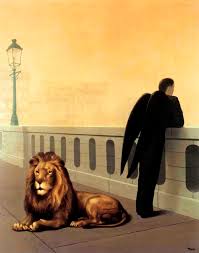 after Magritte’s Le Mal du Pays (Homesickness) 1940
It could be sunrise or sunset
but the whole sky is a sulphur-film
with no hint of sun or moon,
only the faint tracings of buildings
behind an eerie glow.
This is a no-time no-place zone,
a liminal space of the mind’s making.
Memory seems to be sleeping.
The setting seems perfect for forgetting.
The pale grey bridge a reprieve from land,
even the land you love – terrain that holds
all your footfalls, for better or worse.
A gas lamp looks on – a spectral figure –
is it Memory in one of her guises?
The pale grey bridge an unoccupied home,
except for you, your lion companion,
and the ghosts who won’t leave you alone –
they hover, try to nest in your black wings.
Lion sits, a survivor of human and animal
territories. His mane radiates bright yellow
and orange, as if to signal hope, console
the dark angel you’ve become.
You stand, breathing the air over water –
an enticing vapour. You gaze at the river,
a home with a history of forgetting,
for those who could not bear remembering.
Faces keep floating to the surface.
Memory, fully awake, cannot stop flooding
your mind, carrying you back to childhood,
to the face in the water – your mother’s.
Ever since, only the surreal has made sense.
Can you now survive losing wife and home –
the kiss of land, the warm hand?
Lion is waiting for your dark angel to go.
Lion is waiting for you to turn around,
breathe living air, paint a clear blue sky.
after Magritte’s Le Mal du Pays (Homesickness) 1940
It could be sunrise or sunset
but the whole sky is a sulphur-film
with no hint of sun or moon,
only the faint tracings of buildings
behind an eerie glow.
This is a no-time no-place zone,
a liminal space of the mind’s making.
Memory seems to be sleeping.
The setting seems perfect for forgetting.
The pale grey bridge a reprieve from land,
even the land you love – terrain that holds
all your footfalls, for better or worse.
A gas lamp looks on – a spectral figure –
is it Memory in one of her guises?
The pale grey bridge an unoccupied home,
except for you, your lion companion,
and the ghosts who won’t leave you alone –
they hover, try to nest in your black wings.
Lion sits, a survivor of human and animal
territories. His mane radiates bright yellow
and orange, as if to signal hope, console
the dark angel you’ve become.
You stand, breathing the air over water –
an enticing vapour. You gaze at the river,
a home with a history of forgetting,
for those who could not bear remembering.
Faces keep floating to the surface.
Memory, fully awake, cannot stop flooding
your mind, carrying you back to childhood,
to the face in the water – your mother’s.
Ever since, only the surreal has made sense.
Can you now survive losing wife and home –
the kiss of land, the warm hand?
Lion is waiting for your dark angel to go.
Lion is waiting for you to turn around,
breathe living air, paint a clear blue sky.
Back to poet list… Forward to next poet
.
.
.
.
.
.
.
.
.
.
.
.
.
.
.
.
.
***
Rosalind Adam: Driving Home From Work

Darkness is a comforting passenger
but all too soon I turn into Main Street
where shop lights dazzle and traffic slows.
I glance at the flock-walled curry house
with sizzling baltis and bottles of lager,
the estate agent offering homes beyond means,
and the 24-hour Tesco Express,
its o flashing spasmodically.

Its neon asymmetry jars
like an upturned toy box,
a lego-strewn carpet,
a crayon-covered wall.
I see a shopper emerge from Tesco’s,
head down, hood up,
clutching an instant meal-for-one,
unaware of the intermittent o

yet its imperfection remains
like an after-burn on my retina o  o  o
as I struggle to blank out the imminent:
complaints from the childminder,
congealed breakfast plates,
bathtime battles,
and I allow my mind to lust
after an instant meal-for-one.
Back to poet list… Forward to next poet
.
.
.
.
.
.
.
.
.
.
.
.
.
.
.
.
.
***
Rachael Clyne: The House Was a Brazen Hussy

With its red door and brass knocker.
Its lounge had a lot of front
a bay window draped in lilac chiffon.

Upstairs there was a bit of slap and tickle
sometimes more slap than tickle
which the noise of TV couldn’t drown.

Behind the door with a nameplate
marked Molly painted with violets,
bedtime stories were read alone.

The kitchen had an ASBO
you’d need a pair of marigolds
to touch the draining board.

The back door was a drudge
the cobbled yard had a line in gossip,
pegged with smalls and scent of bleach.

The outside bog only housed cobwebs.
and desiccated corpses. Best head down
the escape snicket. quick as knickers.
Back to poet list… Forward to next poet
.
.
.
.
.
.
.
.
.
.
.
.
.
.
.
.
.
***
Clifford Liles: Washhouse Blues

In winter’s eastern light, I hug my clothes
swooning in a collapsible bag.
Push the door and load the washer closest.

Those machines lined up like portholes
on a sun-filled day, smelling of hot cotton,
in this room, just one of my boltholes.

On all the patchwork walls are faded friezes
of neglect; posters pasted. In a washer
adjacent, another life rolls like storm leaves.

A heavy clank as it ends. Someone else’s sock
lays in a dry drum. Outside, a town of tarmac-scars
convalesces on this Saturday at 8 o’clock.

I count out coins for my weekly chores. A café
nearby is proxy for a kitchen, the inkling
of a home – I can’t afford a gravel driveway.

Dull day, the mortar in a wall of weeks.
Rootless, picking up a book, I escape
the drudgery to a fictional retreat.
Back to poet list… Forward to next poet
.
.
.
.
.
.
.
.
.
.
.
.
.
.
.
.
.
***
Marjorie Sweetko: 3 a.m. jobs for the sleepless

There’s sorting herbs and spices in the bottom drawer,
urging packet contents into canisters, meanwhile
flushing out duplicates (on the verge
of date-ranking, reason hits the brakes).
There’s kettle descaling, the secret thrill aroused
by lime chips round the drain. Or that election bundle
to be studied, not skimmed, implications and all,
no letting thoughts hop, skip.
You could always recopy your list minus
cross-offs, even add ghosts
you know you ought to get round to ringing.
And why not count the neighbours with a light on,
while you’re at it, or check whether the moon’s
embroiled the privet in some spooky charade.
Back to poet list… Forward to next poet
.
.
.
.
.
.
.
.
.
.
.
.
.
.
.
.
.
***
Lawrence Bradby: No Such Address

This black pen line
looped in a swift fish
shape across the address

turned my letter back
from its destination
– my eldest child’s current
temporary lodgings
several countries north
of here – and returned it

to my hand, unopened
but well-travelled.

Such power in a line.
Back to poet list… Forward to next poet
.
.
.
.
.
.
.
.
.
.
.
.
.
.
.
.
.
***
Alessandro Merendino: Delete it. This is confidential

I went through my drawer
and found a pencil
the black-and-white one
you brought from Rome,
your favourite bookshop by the Spanish Steps.

It never needs sharpening

the line you follow is yours;
this one stays in the drawer.
Back to poet list… Forward to next poet
.
.
.
.
.
.
.
.
.
.
.
.
.
.
.
.
.
***
Lydia Unsworth: Administrative Error

like texting hello
receiving the caps-lock counter-torrent at a bus stop
outside my high school, aged 40
which after all that life was the perfect place
to receive it
on this long road that connects the lot
   the schools and dead grandparents, all the past
houses, the cemetery, the church
the labour club, the dentist, the doctor, the nursery, the man
in the white van who gave us alcohol

to be officially estranged you must not have spoken
to either living parent for a period of twelve months

we wouldn’t cross the dual carriageway
   like cats, we knew that

at either end of history is a roundabout
and a mangled pedestrian guard rail
Back to poet list… Forward to next poet
.
.
.
.
.
.
.
.
.
.
.
.
.
.
.
.
.
***
Sue Norton: The Notice in the Lift

Why not take the stairs?
says the lift

to the woman who reaches up
to press the button. The lift cage shuts,
a mouse breath between the steel
and her wheelchair’s footplate.

She used to take the stairs, two at a time,
before life changed.

When the lift doors do their reveal
a flicker shivers the queue before it shuffles back,
faces tilting down to smile
a bit too kindly as she wheels by.


Sue Norton: A Skull on a Yellow Box

We sit by Infectious Waste, next to Dirty Sluice.
Hazardous! Sharps! says a skull on a yellow box.
A poster asks How are we doing?
The trolley’s too short, the patient’s legs stick out
shiny and blue-veined in fluorescent light.
We’re shunted to a cubicle.
Respect my Privacy.
We can’t stop hearing nurses ask
On a scale of one to ten, when ten is the worst pain ever?
A man yells Nine!
A nurse looks up before she writes that down.
Be Seen to Be Clean, Give Soap A Chance says the basin.
The patient is hungry, he’d love a cup of soup.
The kitchenette says Keep Closed.
A blue triangle props it open.
All the nurses say Give me five minutes.
We see a doctor!
His bleeper bleeps him to a resuscitation.
We sit down again.
The patient’s hands are mauve, we tuck them with a scarf.
How are we doing? asks the poster.
Back to poet list… Forward to next poet
.
.
.
.
.
.
.
.
.
.
.
.
.
.
.
.
.
***
Nuala O’Farrell: She

She,
who gave birth
in a cowshed, wrenched
in pain, her baby son
born into chaos, and cold
and the threat of slaughter.
She,
already shredded by
the competing demands
of Martha, always complaining,
and Elizabeth, pregnant,
at her age, and Joseph,
always obsessing about the census,
insisting she travel to Bethlehem,
on a donkey, while in labour.
She,
still seeping blood from the natal
cleft,
bravely, and because
this is their first Christmas,
and because, Lord,
if it be Thy will..
She
swaddles her newborn in the manger,
reassures Joseph the baby is his,
never mind the Angel Gabriel,
She
Smiles at the silly shepherds,
For now she must surreptitiously,
feed her infant, before
the Heavens erupt
with the Angels singing,
and the Three Wise Men,
so they say,
pick an ungodly time
to visit.
Back to poet list… Forward to next poet
.
.
.
.
.
.
.
.
.
.
.
.
.
.
.
.
.
***
Deborah Tyler-Bennett: Behind the Shop

lurked Stock Room objects Mum dinged-into me
shouldn’t be played with: behind sweaty putty tubs
window panes hosting lightning-strike cracks;
Edwardian paint tins, hazardous contents of
dried colours – ‘brick dust’, ‘gamboge’, ‘ivory’;
oozing ‘fillers’ leaking boggy mess.  Dad’d get
shirty: ‘She’s touched nothing, not on my watch.’
Items forbidden fascinated, like Travellers –
lugubrious men with funeral-tea faces, arrived
suggesting pans, pots, devices for ‘home economy.’

Come December, eager for ‘Back Room Sherry’,
cases festive with yearly gifted calendars.  Gran,
not harbouring ‘reet Merchants’ coming on spec,
said ‘Proper Travellers I’ve known for oceans.’
Pointed-out their calendars weren’t ‘Percy Filth’
but ‘famous paintings’, seascapes, hearty Squires
at coaching inns, sharing port and manly things.
In the Store Room un-hung calendars dwelt,
eleven months, below the Christmas wrap.

Long gone, like her, those old associates,
death knell?  Denim suited visitors (no ties)
pushing Boiler Ads with Striptease girls.
Gran didn’t take these to the Stock Room: ‘That
weasel doesn’t know me merchandise, I’m having nowt.’

I see redundant Travellers, bristling overcoats,
twill trousers, Brylcreemed hair.  Marching roads
uncharted, searching custom.  They pass by small
concerns, FOR SALE! ENQUIRIES!  Soon replaced
with UP FOR AUCTION.  Folded pamphlets for ‘Grand
Clearance’ lining barren windows.
Back to poet list… Forward to next poet
.
.
.
.
.
.
.
.
.
.
.
.
.
.
.
.
.
***
David Bernard: Step Ladder

A crown of light
so high
you could be gazing up
at the moon

You’re engulfed by this darkness,
heavy enough
to have a gravitational pull.

Others peer in,
offering words of support
that clatter
like stones
on to cobbles.

A doctor speaks up,
distant, muffled,
the rattling of a keyboard,
the whir of a printer,
a prescription spat out.

Or a step ladder
as they call it,

to get you through this period —
it may even allow you
to peer out
of the hole.

But take away the step ladder
and the hole remains.

A hole that needs filling
one stone at a time.
Back to poet list… Forward to next poet
.
.
.
.
.
.
.
.
.
.
.
.
.
.
.
.
.
***
Jim C Wilson: The Fireman

Bill the fireman came at Christmas
in a box and his hard red coat.
His legs were flat as rulers,
arms as thin as milk straws.

Bill's grin was as wide as the Man
in the Moon’s; face shell-pink, yet dull.
All his innards were cogs and levers,
and hummed so busily.

His only task was to climb his ladder
(to seek out some fire, I suppose).
I twisted the key behind Bill's back
then watched his steady slow ascent.

He hummed to his ladder's highest rung
then stiffly grabbed the winter air.
Bill spun away, he fell aside
and cracked down on the lino floor

where he turned with his deep-blue legs
in the air, his crazy grin intact.
Then Bill lay still, my new friend lost,
quiet among the yellow needles,

his key pierced through his silent heart.
Bill the fireman came at Christmas
but was gone before the afternoon.
And now as I keep trying to climb,

keep grabbing for handholds in the air,
I remember Bill who looked for fire,
and feel that all my life I'll know
his unexpected headlong fall.
Back to poet list… Forward to next poet
.
.
.
.
.
.
.
.
.
.
.
.
.
.
.
.
.
***
Lee Fraser: Staggering Descent

Oh Christmas! Schedules fall to bits
families stressed and pockets stripped.
It’s easy to forget the main event.
The parties, gifts and glitz of it
can inadvertently outstrip
our Saviour and his staggering descent.

His body, through the Spirit lit
was in an earthly womb then knit
and born a humble bundle in the flesh.
His cry, which challenged hypocrites
and made the temple curtain split
began unpoised, ineloquent, undressed.

His form, whose glory far eclipses
stars (which through himself were fixed)
was laid with softness in a feeding trough.
The lips that preached the manuscript
inscribed by Father’s fingertips
were once in frequent need of milk and cloth.

His hands, which crippled figures gripped
which crooked temple tables flipped
were timidly and tenderly wiped down.
Once wrapped in brightness infinite
now wrapped in cloths and firelit
this prince would get no royal robes or crown.

So if, this Christmas, honour slips
and how you’re treated is unfit
in view of all the care that you deserve,
or if you flinch from cashflow hits
your dos and presents are the pits
or messages from friends are empty words

recall Christ’s rightful place to sit
compared to mangers, donkeys, grit.
Our Lord himself was disregarded too.
Remember, in the thick of it
that Jesus did himself submit
to treatment far beneath his kingly due.
Back to poet list… Forward to next poet
.
.
.
.
.
.
.
.
.
.
.
.
.
.
.
.
.
***
Thomas Ovans: Christmas 1914
based on eye-witness reports of the unofficial truce on
the front lines during the first Christmas of World war 1

If I’d seen it in a film
I’d have sworn that it was faked.
It wasn’t filmed but was reported
in the papers and in letters
and began with lighted candles
carols sung on Christmas Eve
and greetings called between the trenches.

The dead were there already waiting
in the frosted mud.  A corpse
won’t care about what uniform
it’s wearing on a killing ground
so why should anybody else?
Soldiers walked towards each other
both sides singing Silent Night

For those who didn’t share a language
sharing a tobacco pouch
would do. And when they’d shaken hands
and smoked, one side would not go back
behind their lines. That changed the rules.
How could we shoot them in cold blood
or resume our former business?

Of course the Top Brass found a way
Back to poet list… Forward to next poet
.
.
.
.
.
.
.
.
.
.
.
.
.
.
.
.
.
***
John Bartlett: Not A Metaphor

what’s the point of
writing poems about
bomb-barded children
or of the injured earth
skies split open
bleeding lies and liars

words have never been enough
no sonnet ever shielded
a child from
amputated limbs

 a villanelle does not defend
buildings from cunning detonations

no simile or metaphor can
block the shriek of
missiles bursting overhead

I survive in
this gated community
walls topped with
shards of indifference
safe from the dead’s revenge
deaf to the sound
of souls rising skyward
like flocks of
homing swallows
Back to poet list… Forward to next poet
.
.
.
.
.
.
.
.
.
.
.
.
.
.
.
.
.
***
Alwyn Marriage: Vigil
They are not fooled, the young.
Even the clatter of adolescent or
early adult life can't stem for them
the tsunami of each day's
bad news.
It's not their fault they have
internalised the global war-torn
map and are acquainted with
night's mental videos of cruelty
and catastrophe.
But ever since Russia overstepped
the mark into Ukraine, hundreds of
teens and twenties take a break from
pubs and clubs each Friday night to visit,
briefly, the oldest church in town.
Soft lighting guides their way
towards the chancel where, on three
stone steps, scores of candles illuminate
the darkness, flickering with all the
urgency of youth.
A constant stream of energy flows in
through the open doors: short-haired lads
from the army barracks, scantily-clad
hen-party girls with bunny ears, pierced
navels, brows and noses.
Neither rain nor snow, or even rugby
internationals can keep them from this place
of undemanding welcome where, no strings
attached, they simply, wordlessly, state
their longing for peace.
They come in fours or fives, singly
or in pairs, bearing tiny flames of hope.
They plant their candles carefully among
the others, hover or sit looking at the light,
stand quietly a while, then leave.
It even feels as though the town is changed
a little by this weekly ritual, as also, clearly,
are those never-be-seen-dead-in-a-church
Friday-night revellers who have chosen
in this way to commit themselves to peace.
 Vigil for Peace at St Mary’s church Guildford started out as an event called Night
Vision on the third Friday in the month. Since the beginning of the war in Ukraine,
the Night Vision time and all other Fridays have been extended into a "Vigil for
Peace" with other warzones in mind.

Since the vigils started over 10,000 people have come into St Mary's – some just
for a few minutes to light a candle, others for much longer to pray, reflect, have
a chat, tell us about their experiences. Many are quite surprised to find themselves
coming into a church during their night out in Guildford but all leave appreciative of
the time to reflect.
Back to poet list…
.
.
.
.
.
.
.
.
.
.
.
.
.
.
.
.
.
***
Rosalind Adam publications include short stories, articles, children’s books and poetry. In 2018 she won the G. S. Fraser poetry prize, was awarded a distinction for her MA in Creative Writing at Leicester University and has, since then, had over twenty poems published.
Solape Adetutu Adeyemi has a Bachelor’s degree in Microbiology and a Master’s in Environmental Management. She has works published in the Poetry Marathon Anthology, the Guardian newspaper, the Kalahari review and the Indiana review among others
Angela Bailey is an Irish poet living in Leicestershire, published in The Cannon’s Mouth, Morley Magazine, The Frogmore Papers, Skylight 47 and various anthologies, longlisted in the 2022 Mslexia competition, shortlisted by Southword and HOWL New Irish Writing in 2024.
John Bartlett is the author of eleven books of fiction, non-fiction and poetry. He was winner of the 2020 Ada Cambridge poetry prize, highly commended in the 2021 Mundaring poetry competition. His latest poetry pamphlet is In the Spaces Between Stars Lie Shadows (Walleah Press). he lives in southern Australia.
Kathleen Bell’s collection, Disappearances was published by Shoestring in 2021. Her lockdown pamphlet, Do you know how kind I am? was published by Leafe Press in the same year. She lives near Nottingham in the East Midlands.
David Bernard is a poet based in Herefordshire. His work has been published by Wildfire Words and Lighten Up Online.
Lawrence Bradby writes poems and short non-fiction prose texts. He was born in Scotland, grew up in England and currently lives in Portugal. He writes a blog about learning a new language and trying to find a way to belong – livingnotathome.blogspot.com
Michael Carrino is a retired English lecturer at the State University College at Plattsburgh, New York, where he was co-founder/poetry editor of the Saranac Review. Publications include ten books of poetry, the most recent Natural Light (Kelsay Books), and The Scent of Some Lost Pleasure (Conestoga Zen 3 Anthology).
Rachael Clyne– retired psychotherapist. Her prizewinning collection, Singing at the Bone Tree (Indigo Dreams 2014), concerns eco-issues. Her latest (Seren 2023), You’ll Never Be Anyone Else, explores identity, migrant heritage, LGBTQ+ and relationships: @rachaelclyne.bsky.social https://rachaelclyne.substack.com
Carol DeVaughn’s poetry has been published in magazines, journals, anthologies and online. Her first full collection, Life Class, was published in 2018. She has been reciting poems for charity since 1995
David Dumouriez wouldn’t be tempted to blow his own trumpet even if a) he had a trumpet or b) he knew how to play one.
Anne Eyries has poetry published in various journals, including Amsterdam Quarterly, Consilience, Dream Catcher, Dust, Feral, Humana Obscura, London Grip, and Woodside Review. She lives in France
Lee Fraser grew up in Aotearoa New Zealand, and her full-time occupations have included field linguist and parent. In the last two years she’s had 50 pieces accepted for publication internationally, and placed fourth in the 2024 NZ poetry slam. www.leefraserpoetry.com
Charlotte Gann is an editor from Sussex. She’s author of two poetry pamphlets: The Long Woman (Pighog, 2011; shortlisted for the Michael Marks Award) and Cargo (Mariscat, 2023); and two books: Noir (2016) and The Girl Who Cried (2020), both published by HappenStance.
John Grey is an Australian poet, US resident, recently published in New World Writing, River And South and The Alembic. Latest books, Subject Matter,Between Two Fires and Covert are available through Amazon. Work upcoming in Paterson Literary Review, White Wall Review and Cantos.
James Croal Jackson is a Filipino-American poet working in film production. His latest chapbook is A God You Believed In (Pinhole Poetry, 2023). Recent poems are in ITERANT, Stirring, and The Indianapolis Review. He edits The Mantle Poetry from Nashville, Tennessee. (jamescroaljackson.com)
Ross Jackson is a retired teacher. He has had poems in many journals and poetry websites. A collection, Time alone on a quiet path came out in 2020 (UWAP). His latest collection is Suited to Grey (WA Poets Press).
Pam Job lives on an estuary in Essex, a source of inspiration, being in tune with migrating birds. This year she won First Prize in the Wirral poetry competition and Third Prize & Commended in The Crabbe Memorial Competition. She has had poems published in The Frogmore Papers and Twelve Rivers and London Grip.
Brian Kirk has published two collections with Salmon Poetry, After The Fall (2017) and Hare’s Breath (2023) and a fiction chapbook It’s Not Me It’s You (Southword Editions, 2019).
Michael Klimeš is a financial journalist based in London. He has been published in Alchemy Spoon, Poetry Worth Hearing, Wildfire Words, One Hand Clapping Magazine and Iota. His pamphlet Love Carries the Future was shortlisted in the Full House Literary Magazine Digital Chapbook 2023 competition and longlisted in the Black Cat Poetry Press pamphlet competition 2024 and Alchemy Spoon Pamphlet Competition 2022.
David Lewitzky is a retired social worker/family therapist living in the USA in Buffalo, New York. When he was a young man he studied under Charles Olson whom he considers his ‘spirit father’. In 2002 he resumed writing poetry after a 35 year hiatus. He has had about 150 poems published in a variety of litmags throughout the world such as Two Thirds North (Sweden), Seventh Quarry (Wales) and Nimrod (USA).
Clifford Liles lives in Herefordshire but has travelled, lived, and worked in several countries throughout Europe and in Australia. His poems have been published in Acumen, Orbis, Poetry Salzburg Review, London Grip, Obsessed with Pipework, South, Dream Catcher, and Anthropocene. His latest collection A Square Peg in a Round World was published by Black Pear Press in September 2025 and takes the reader on a global odyssey through both untamed wilderness and urban landscapes. www.cliffordliles.com.
Michael Loveday lives in Bath and works as an editor and mentor. More information is available at: https://michaelloveday.com/about/
Alwyn Marriage’s sixteen books include poetry, non-fiction and novels. Her latest poetry collection, Travelling Light, won the Hedgehog prize in 2024. Formerly a university philosophy lecturer, Director of two international NGOs and Managing Editor of Oversteps Books, she is widely published and gives reading all over Britain and abroad. www.marriages.me.uk/alwyn.
Christine McNeill’s latest collection was A Breath of Time (Shoestring Press, 2023). She has also translated Rilke and other German poets
Alessandro Merendino, PhD, is a qualified accountant in the UK and Italy, and an Associate Professor at Queen Mary University of London. He received a poetry award in Italy at the age of nine and, after three decades of quiet writing, has now returned to publishing.
Jim Murdoch has been writing poetry for fifty years and has graced the pages of many now-defunct literary magazines and websites and a few, like Ink, Sweat and Tears and Poetry Scotland that are still hanging on in there. For ten years he ran the literary blog The Truth About Lies but now lives quietly in Scotland with his wife and, whenever the mood takes him, next door’s cat. He has published two books of poetry, a short story collection and four novels: Jim, not the cat.
Julie-Ann Rowell is a multi-award-winning poet whose work has won, and been shortlisted for, many prestigious awards. Her poem Fata Morgana was Highly Commended in the Forward Prize Single Poem section, 2020/21. Her seventh collection, a pamphlet called Hame, published by Nine Pens Press, describes life on the Orkney Isles where she lives. www.jarowell.co.uk
Caleb Murdock was born in 1950 and lives in Rhode Island, U.S.A. He spent most of his life as a word-processing operator for law firms. He has written poetry since his twenties but didn’t lose his chronic writer’s block until his mid-sixties. He is now writing up a storm to make up for lost time.
Rosemary Norman’s fourth collection, Solace, was published in October 2022 by Shoestring Press. In 2023 she and video artist Stuart Pound published Words & Pictures, a book of poems and stills from their collaborative work, with a link to Vimeo.
Sue Norton is a member of the York Stanza.She has had poems published in various magazines and anthologies
Nuala O’Farrell is and Irish writer and recently retired doctor, who has been writing all her life but has been extensively published in the past two years. Her poems have been published both on line and in print in The Galway Review’, ‘Causeway Cabhsair , Gypsophila and Drawn to the Light Press and the Samaritan’s anthology 100 Poems of Hope. She is presently doing a Masters in creative writing in U.C.D.
As a poet, Thomas Ovans has been going through a fallow period and supposed for a while that he had become invisible
Emma-Jane Peterson writes for magazines in the US and the UK, where she lives. Her poems are published in BoomerLitMag, The Ekphrastic Review, Metphrastics, Penstricken, Black Nore Review, Prosectrics, and The Amazine, among others. She is the co-author of a book of children’s Bible stories (Parragon).
Andrew Shields lives in Basel, Switzerland. His collection of poems “Thomas Hardy Listens to Louis Armstrong” was published by Eyewear in June 2015. His band Human Shields released the album “Somebody’s Hometown” in 2015 and the EP “Défense de jouer” in 2016. His poems have recently appeared online in Eunoia Review, Poem Alone, Shot Glass Journal, and Talking About Strawberries.
Mastodon: https://mas.to/@AndrewShields; Ghost: https://111-words.ghost.io/
Facebook: https://www.facebook.com/andrewshieldspoems/
Jill Sharp’s pamphlet Ye gods was published by Indigo Dreams and her work also features in Vindication, a six-poet collection from Arachne Press. She was a runner-up in the Keats-Shelley Prize in 2020 and 2025, and a Hawthornden Fellow in 2023.
Jane Simpson, a poet and historian from New Zealand, has three collections, A world without maps (2016), Tuning Wordsworth’s Piano (2019) and Shaking the Apple Tree (2024). Her poems have most recently appeared in Allegro, London Grip, Poetry Wales, Hamilton Stone Review, Meniscus and Poetry Aotearoa Yearbook.
Kathryn Southworth has five books of poetry, the first from Indigo Dreams in 2018, the most recent Slantwise History from VOLE in 2024. Her poetry and reviews have appeared in number of magazines and anthologies and for a while she hosted Torriano in cyberspace. She moved from London to Gloucestershire four years ago.
Marjorie Sweetko’s poetry has appeared in journals like Magma, Poetry Salzburg Review, The North, The London Magazine, Antiphon, The High Window, as well as in anthologies One for the Road (Poetry Business) and It will happen by chance (French Stanza). Born in Montreal, she lived in London and Sussex before teaching English in various countries and settling in Marseille.
Deborah Tyler-Bennett is a European poet and fiction writer, who regularly performs her work. Current poems have appeared in Poetry and All That Jazz, The Standing in This Place Anthology, and she has a sequence in the forthcoming Civic Leicester volume La Manche (2026). Deborah’s currently podcasting her 1940’s set short stories, Turned Out Nice Again, for Charnwood Arts
Lydia Unsworth is a poet based in Greater Manchester, UK. Her work has appeared in many journals and anthologies including Oxford Poetry and Shearsman Magazine. She is an NWCDTP-funded PhD candidate at the Centre for Place Writing, MMU, looking at kinship with disappearing post-industrial architecture
John Whitehouse lives in London. He suffers from aphasia after a major stroke, which affects him with comprehension. His work has been in: Interpreters’ House, Acumen, Frogmore Papers, Stand, French Literary Review, Cannons Mouth, London Grip, and various Poetry anthologies, including Coal, commemorating the Miner’s Strike. His poetry was commended twice in the Bridport Prize, and short listed for the Templar Prize. He has two collections. A Distant Englishness published by Clayhanger Press in 2024 and the second After a Short Illness is to be published by Broken Sleep in 2026
Merryn Williams’ latest publication is Ruth Bidgood: Chosen Poems, with a memoir (Shoestring Press).
Nov 30 2025
London Grip New Poetry – Winter 2025-6
*
ISSUE 58 of LONDON GRIP NEW POETRY features poems by:
*Michael Carrino *James Croal Jackson *David Lewitzky *John Grey
*Anne Eyries *Merryn Williams *Andrew Shields *John Whitehouse
*Jim Murdoch *Julie-Ann Rowell *Kathryn Southworth *Michael Loveday
*Kathleen Bell *Jill Sharp *David Dumouriez *Michael Klimeš
*Christine McNeill *Caleb Murdock *Pam Job *Solape Adetutu Adeyemi
*Brian Kirk *Jane Simpson *Emma-Jane Peterson *Angela Bailey
*Charlotte Gann *Ross Jackson *Rodney Wood *Rosemary Norman
*Carol DeVaughn *Rosalind Adam *Rachael Clyne *Clifford Liles
*Marjorie Sweetko *Lawrence Bradby *Alessandro Merendino *Lydia Unsworth
*Sue Norton *Nuala O’Farrell *Deborah Tyler-Bennett *David Bernard
*Jim C Wilson *Lee Fraser *Thomas Ovans *John Bartlett *Alwyn Marriage
Contributor Biographies and Editor’s Notes are also included.
Copyright of all poems remains with the contributors
A printable version of this issue can be found at LG New Poetry Winter 2025-26
London Grip New Poetry appears early in March, June, September & December
SUBMISSION GUIDELINES:
Send up to THREE poems & a brief bio to poetry@londongrip.co.uk
Poems should be in a SINGLE Word attachment or included in the message body
Our submission windows are January, April, June & October
Please do not include us in simultaneous submissions
*
Editor’s notes
As another year draws to an end, we wish all our readers a very happy Christmas and good prospects for 2026.
In fact, Christmas is mentioned in only a handful of the poems in this issue but an appreciation of – or more commonly a longing for – the seasonal feelings of peace and goodwill can be detected more widely. Is it over-pessimistic to observe that those commodities are in even shorter supply this year? Or does that gloomy view arise because of the confrontational nature of politics as amplified in much or our media? Perhaps at the local and personal level we can still manage to deal with one another more generously. Our closing poem seeks to highlight one rather small, very local but delightfully surprising glimpse of hope as it describes a Vigil for Peace sustained by young people in Guildford. May their candle flames become part of a spreading fire.
As is too often the case, we are obliged to mention the deaths of some prominent poets over the three months since out last posting. Two of them who enjoyed national and international reputations, well summarised in Guardian obituaries are Brian Patten and Tony Harrison. A third, John Lucas, had perhaps a lower profile as a poet; but he made up for that by being also a novelist, academic, editor, reviewer and publisher. He has not yet been granted a Guardian obituary but will nevertheless be well known to London Grip readers for the thoughtful and entertaining book reviews he contributed over the last decade or so. Furthermore many of our contributors over the years have had collections published (and perceptively edited) by him at Shoestring Press. John’s own last book was The Moon Shines on Them All, a collection of essays celebrating some memorable friendships across the whole span of a well-lived life. It seems a very fitting closing word from a warm-hearted and generous man.
Michael Bartholomew-Biggs
London Grip poetry editor
Back to poet list… Forward to first poet
.
.
.
.
.
.
.
.
.
.
.
.
.
.
.
.
.
***
Michael Carrino: Downtown on Bridge Street -after visiting the friend I've exchanged letters with for some time now, it will be time to return to Canada. Montreal now, then I'm not sure. —from Alvy's journal Harsh treble in some instrument has pushed me out of Fillion's river level door. As it slams behind me I watch the Saranac roil, gaze at dark, empty sky. I find the stone steps, climb to the sidewalk, until the river hisses under me. I'm surprised I'm not wearing shoes. Fillion's has been empty, silent all these years. My feet must be bleeding, but the sidewalk turns to clean white sand, and further ahead a long beach. Lake Champlain is an ocean dappled by moonlight. It seems I must slip into the rough waves, find my shoes, where I left my suitcase, and try to inquire at the Egg and the Machine Shop how I missed seeing the train station, my favorite downtown building, and when the next bus to Montreal will depart. There has been no bus depot downtown, for a long time. The Egg a hazy memory. I have misplaced my watch. I'm sure it can't be much after midnight. Maybe a later piece of morning. Anyway, I'm sitting at a table in Indigo Books writing you a letter, sipping black coffee, while listening to someone play “Misty” on the piano. I'm glad Indigo has this piano. Anyone can sit down if inclined, and play freely and for free. I'm glad we still exchange letters after all these years. I'm writing to mention what seemed to take place after my visit last week. Strange trip... So it goes. Montreal now, then I'm not sure. I stole that last bit from my writing journal. It's quite helpful. I'm stealing more lines from the journal hopefully for a new poem I'll send with this letter or the next. Take care. Oh, and please go downtown and find the train station, the tracks, especially if the rails are gleaming in mid-day sunlight, waiting for a train that will take anyone south through the Adirondacks, or north across the border. I breathe more easy lately when the train crosses the border.Back to poet list… Forward to next poet
.
.
.
.
.
.
.
.
.
.
.
.
.
.
.
.
.
***
Back to poet list… Forward to next poet
.
.
.
.
.
.
.
.
.
.
.
.
.
.
.
.
.
***
Back to poet list… Forward to next poet
.
.
.
.
.
.
.
.
.
.
.
.
.
.
.
.
.
***
Back to poet list… Forward to next poet
.
.
.
.
.
.
.
.
.
.
.
.
.
.
.
.
.
***
Back to poet list… Forward to next poet
.
.
.
.
.
.
.
.
.
.
.
.
.
.
.
.
.
***
Back to poet list… Forward to next poet
.
.
.
.
.
.
.
.
.
.
.
.
.
.
.
.
.
***
Back to poet list… Forward to next poet
.
.
.
.
.
.
.
.
.
.
.
.
.
.
.
.
.
***
Back to poet list… Forward to next poet
.
.
.
.
.
.
.
.
.
.
.
.
.
.
.
.
.
***
Jim Murdoch: What Remains [L]ove isn’t stronger than death just because two statues hold hands for six hundred years – Philip Larkin (note on early draft of An Arundel Tomb) People misquote him all the time. Not the line about mums and dads— he absofuckinlutely nailed that one— the uncharacteristic one about love. They replace survives with remains. A more Larkinesque choice redolent of corpses and decay and apropos. The remains of love remain. Better. If it does somehow survive intact love survives because it devours. Love conquers all, someone said, and, yes, the conquerors survive to romanticise the past any way they goddamn please.Back to poet list… Forward to next poet
.
.
.
.
.
.
.
.
.
.
.
.
.
.
.
.
.
***
Back to poet list… Forward to next poet
.
.
.
.
.
.
.
.
.
.
.
.
.
.
.
.
.
***
Back to poet list… Forward to next poet
.
.
.
.
.
.
.
.
.
.
.
.
.
.
.
.
.
***
Back to poet list… Forward to next poet
.
.
.
.
.
.
.
.
.
.
.
.
.
.
.
.
.
***
Back to poet list… Forward to next poet
.
.
.
.
.
.
.
.
.
.
.
.
.
.
.
.
.
***
Jill Sharp: King Midas’ barber: uncut The king has ass’s ears! I’ve seen them but I’m not allowed to say. The people bow to him and he has ass’s ears! The laws are made by him and he has ass’s ears! He told me they’re a punishment from Apollo – for preferring Pan’s music to his. A likely story. But I’m not allowed to say. A bee is free to signal to the hive, a bird to sing, a dog to howl its pain. But I must see and think and feel and hold my tongue. My lips are sealed as if with tape, my fingers bound, so I cannot reveal those ass’s ears. Forced silence makes the pulses race, the hot blood boil. Frantic, I dig a hollow in the earth, murmur in her ear, fill back the soil. Now new-grown grasses whisper on the breeze ass’s ears ass’s ears Blue lights are flashing in my street. A fist is pounding on my door.Back to poet list… Forward to next poet
.
.
.
.
.
.
.
.
.
.
.
.
.
.
.
.
.
***
Back to poet list… Forward to next poet
.
.
.
.
.
.
.
.
.
.
.
.
.
.
.
.
.
***
Back to poet list… Forward to next poet
.
.
.
.
.
.
.
.
.
.
.
.
.
.
.
.
.
***
Back to poet list… Forward to next poet
.
.
.
.
.
.
.
.
.
.
.
.
.
.
.
.
.
***
Back to poet list… Forward to next poet
.
.
.
.
.
.
.
.
.
.
.
.
.
.
.
.
.
***
Back to poet list… Forward to next poet
.
.
.
.
.
.
.
.
.
.
.
.
.
.
.
.
.
***
Back to poet list… Forward to next poet
.
.
.
.
.
.
.
.
.
.
.
.
.
.
.
.
.
***
Back to poet list… Forward to next poet
.
.
.
.
.
.
.
.
.
.
.
.
.
.
.
.
.
***
Back to poet list… Forward to next poet
.
.
.
.
.
.
.
.
.
.
.
.
.
.
.
.
.
***
Back to poet list… Forward to next poet
.
.
.
.
.
.
.
.
.
.
.
.
.
.
.
.
.
***
Back to poet list… Forward to next poet
.
.
.
.
.
.
.
.
.
.
.
.
.
.
.
.
.
***
Back to poet list… Forward to next poet
.
.
.
.
.
.
.
.
.
.
.
.
.
.
.
.
.
***
Ross Jackson: Surfing the smells across the road from The Grand Torbay a beach under cloud flea ridden seaweed dumped overnight by the heavy engine of the sea after you’re opening car door aroma of what white water’s flushing between centipede legs of a Victorian pier passing Wendy’s Waffles, Sweets and Rock breathing it in— chips being fried fairy floss spun all the dawn-while sensing the cold in first phase of dusk pavilion lights going on your ears bearing screaming of gulls out for a share of the sticky food empire dozens in a rush to take off from that wedding cake’s piped icing railings Neptune’s princeling, you’re still here in the gloaming sensing loneliness in the air at Sludge-by-the-SeaBack to poet list… Forward to next poet
.
.
.
.
.
.
.
.
.
.
.
.
.
.
.
.
.
***
Back to poet list… Forward to next poet
.
.
.
.
.
.
.
.
.
.
.
.
.
.
.
.
.
***
Back to poet list… Forward to next poet
.
.
.
.
.
.
.
.
.
.
.
.
.
.
.
.
.
***
Carol DeVaughn: Bridge after Magritte’s Le Mal du Pays (Homesickness) 1940
It could be sunrise or sunset
but the whole sky is a sulphur-film
with no hint of sun or moon,
only the faint tracings of buildings
behind an eerie glow.
This is a no-time no-place zone,
a liminal space of the mind’s making.
Memory seems to be sleeping.
The setting seems perfect for forgetting.
The pale grey bridge a reprieve from land,
even the land you love – terrain that holds
all your footfalls, for better or worse.
A gas lamp looks on – a spectral figure –
is it Memory in one of her guises?
The pale grey bridge an unoccupied home,
except for you, your lion companion,
and the ghosts who won’t leave you alone –
they hover, try to nest in your black wings.
Lion sits, a survivor of human and animal
territories. His mane radiates bright yellow
and orange, as if to signal hope, console
the dark angel you’ve become.
You stand, breathing the air over water –
an enticing vapour. You gaze at the river,
a home with a history of forgetting,
for those who could not bear remembering.
Faces keep floating to the surface.
Memory, fully awake, cannot stop flooding
your mind, carrying you back to childhood,
to the face in the water – your mother’s.
Ever since, only the surreal has made sense.
Can you now survive losing wife and home –
the kiss of land, the warm hand?
Lion is waiting for your dark angel to go.
Lion is waiting for you to turn around,
breathe living air, paint a clear blue sky.
after Magritte’s Le Mal du Pays (Homesickness) 1940
It could be sunrise or sunset
but the whole sky is a sulphur-film
with no hint of sun or moon,
only the faint tracings of buildings
behind an eerie glow.
This is a no-time no-place zone,
a liminal space of the mind’s making.
Memory seems to be sleeping.
The setting seems perfect for forgetting.
The pale grey bridge a reprieve from land,
even the land you love – terrain that holds
all your footfalls, for better or worse.
A gas lamp looks on – a spectral figure –
is it Memory in one of her guises?
The pale grey bridge an unoccupied home,
except for you, your lion companion,
and the ghosts who won’t leave you alone –
they hover, try to nest in your black wings.
Lion sits, a survivor of human and animal
territories. His mane radiates bright yellow
and orange, as if to signal hope, console
the dark angel you’ve become.
You stand, breathing the air over water –
an enticing vapour. You gaze at the river,
a home with a history of forgetting,
for those who could not bear remembering.
Faces keep floating to the surface.
Memory, fully awake, cannot stop flooding
your mind, carrying you back to childhood,
to the face in the water – your mother’s.
Ever since, only the surreal has made sense.
Can you now survive losing wife and home –
the kiss of land, the warm hand?
Lion is waiting for your dark angel to go.
Lion is waiting for you to turn around,
breathe living air, paint a clear blue sky.
Back to poet list… Forward to next poet
.
.
.
.
.
.
.
.
.
.
.
.
.
.
.
.
.
***
Back to poet list… Forward to next poet
.
.
.
.
.
.
.
.
.
.
.
.
.
.
.
.
.
***
Back to poet list… Forward to next poet
.
.
.
.
.
.
.
.
.
.
.
.
.
.
.
.
.
***
Back to poet list… Forward to next poet
.
.
.
.
.
.
.
.
.
.
.
.
.
.
.
.
.
***
Back to poet list… Forward to next poet
.
.
.
.
.
.
.
.
.
.
.
.
.
.
.
.
.
***
Back to poet list… Forward to next poet
.
.
.
.
.
.
.
.
.
.
.
.
.
.
.
.
.
***
Back to poet list… Forward to next poet
.
.
.
.
.
.
.
.
.
.
.
.
.
.
.
.
.
***
Back to poet list… Forward to next poet
.
.
.
.
.
.
.
.
.
.
.
.
.
.
.
.
.
***
Back to poet list… Forward to next poet
.
.
.
.
.
.
.
.
.
.
.
.
.
.
.
.
.
***
Back to poet list… Forward to next poet
.
.
.
.
.
.
.
.
.
.
.
.
.
.
.
.
.
***
Back to poet list… Forward to next poet
.
.
.
.
.
.
.
.
.
.
.
.
.
.
.
.
.
***
Back to poet list… Forward to next poet
.
.
.
.
.
.
.
.
.
.
.
.
.
.
.
.
.
***
Back to poet list… Forward to next poet
.
.
.
.
.
.
.
.
.
.
.
.
.
.
.
.
.
***
Back to poet list… Forward to next poet
.
.
.
.
.
.
.
.
.
.
.
.
.
.
.
.
.
***
Back to poet list… Forward to next poet
.
.
.
.
.
.
.
.
.
.
.
.
.
.
.
.
.
***
Back to poet list… Forward to next poet
.
.
.
.
.
.
.
.
.
.
.
.
.
.
.
.
.
***
Alwyn Marriage: Vigil They are not fooled, the young. Even the clatter of adolescent or early adult life can't stem for them the tsunami of each day's bad news. It's not their fault they have internalised the global war-torn map and are acquainted with night's mental videos of cruelty and catastrophe. But ever since Russia overstepped the mark into Ukraine, hundreds of teens and twenties take a break from pubs and clubs each Friday night to visit, briefly, the oldest church in town. Soft lighting guides their way towards the chancel where, on three stone steps, scores of candles illuminate the darkness, flickering with all the urgency of youth. A constant stream of energy flows in through the open doors: short-haired lads from the army barracks, scantily-clad hen-party girls with bunny ears, pierced navels, brows and noses. Neither rain nor snow, or even rugby internationals can keep them from this place of undemanding welcome where, no strings attached, they simply, wordlessly, state their longing for peace. They come in fours or fives, singly or in pairs, bearing tiny flames of hope. They plant their candles carefully among the others, hover or sit looking at the light, stand quietly a while, then leave. It even feels as though the town is changed a little by this weekly ritual, as also, clearly, are those never-be-seen-dead-in-a-church Friday-night revellers who have chosen in this way to commit themselves to peace. Vigil for Peace at St Mary’s church Guildford started out as an event called Night
Back to poet list…
.
.
.
.
.
.
.
.
.
.
.
.
.
.
.
.
.
***
Rosalind Adam publications include short stories, articles, children’s books and poetry. In 2018 she won the G. S. Fraser poetry prize, was awarded a distinction for her MA in Creative Writing at Leicester University and has, since then, had over twenty poems published.
Solape Adetutu Adeyemi has a Bachelor’s degree in Microbiology and a Master’s in Environmental Management. She has works published in the Poetry Marathon Anthology, the Guardian newspaper, the Kalahari review and the Indiana review among others
Angela Bailey is an Irish poet living in Leicestershire, published in The Cannon’s Mouth, Morley Magazine, The Frogmore Papers, Skylight 47 and various anthologies, longlisted in the 2022 Mslexia competition, shortlisted by Southword and HOWL New Irish Writing in 2024.
John Bartlett is the author of eleven books of fiction, non-fiction and poetry. He was winner of the 2020 Ada Cambridge poetry prize, highly commended in the 2021 Mundaring poetry competition. His latest poetry pamphlet is In the Spaces Between Stars Lie Shadows (Walleah Press). he lives in southern Australia.
Kathleen Bell’s collection, Disappearances was published by Shoestring in 2021. Her lockdown pamphlet, Do you know how kind I am? was published by Leafe Press in the same year. She lives near Nottingham in the East Midlands.
David Bernard is a poet based in Herefordshire. His work has been published by Wildfire Words and Lighten Up Online.
Lawrence Bradby writes poems and short non-fiction prose texts. He was born in Scotland, grew up in England and currently lives in Portugal. He writes a blog about learning a new language and trying to find a way to belong – livingnotathome.blogspot.com
Michael Carrino is a retired English lecturer at the State University College at Plattsburgh, New York, where he was co-founder/poetry editor of the Saranac Review. Publications include ten books of poetry, the most recent Natural Light (Kelsay Books), and The Scent of Some Lost Pleasure (Conestoga Zen 3 Anthology).
Rachael Clyne– retired psychotherapist. Her prizewinning collection, Singing at the Bone Tree (Indigo Dreams 2014), concerns eco-issues. Her latest (Seren 2023), You’ll Never Be Anyone Else, explores identity, migrant heritage, LGBTQ+ and relationships: @rachaelclyne.bsky.social https://rachaelclyne.substack.com
Carol DeVaughn’s poetry has been published in magazines, journals, anthologies and online. Her first full collection, Life Class, was published in 2018. She has been reciting poems for charity since 1995
David Dumouriez wouldn’t be tempted to blow his own trumpet even if a) he had a trumpet or b) he knew how to play one.
Anne Eyries has poetry published in various journals, including Amsterdam Quarterly, Consilience, Dream Catcher, Dust, Feral, Humana Obscura, London Grip, and Woodside Review. She lives in France
Lee Fraser grew up in Aotearoa New Zealand, and her full-time occupations have included field linguist and parent. In the last two years she’s had 50 pieces accepted for publication internationally, and placed fourth in the 2024 NZ poetry slam. www.leefraserpoetry.com
Charlotte Gann is an editor from Sussex. She’s author of two poetry pamphlets: The Long Woman (Pighog, 2011; shortlisted for the Michael Marks Award) and Cargo (Mariscat, 2023); and two books: Noir (2016) and The Girl Who Cried (2020), both published by HappenStance.
John Grey is an Australian poet, US resident, recently published in New World Writing, River And South and The Alembic. Latest books, Subject Matter,Between Two Fires and Covert are available through Amazon. Work upcoming in Paterson Literary Review, White Wall Review and Cantos.
James Croal Jackson is a Filipino-American poet working in film production. His latest chapbook is A God You Believed In (Pinhole Poetry, 2023). Recent poems are in ITERANT, Stirring, and The Indianapolis Review. He edits The Mantle Poetry from Nashville, Tennessee. (jamescroaljackson.com)
Ross Jackson is a retired teacher. He has had poems in many journals and poetry websites. A collection, Time alone on a quiet path came out in 2020 (UWAP). His latest collection is Suited to Grey (WA Poets Press).
Pam Job lives on an estuary in Essex, a source of inspiration, being in tune with migrating birds. This year she won First Prize in the Wirral poetry competition and Third Prize & Commended in The Crabbe Memorial Competition. She has had poems published in The Frogmore Papers and Twelve Rivers and London Grip.
Brian Kirk has published two collections with Salmon Poetry, After The Fall (2017) and Hare’s Breath (2023) and a fiction chapbook It’s Not Me It’s You (Southword Editions, 2019).
Michael Klimeš is a financial journalist based in London. He has been published in Alchemy Spoon, Poetry Worth Hearing, Wildfire Words, One Hand Clapping Magazine and Iota. His pamphlet Love Carries the Future was shortlisted in the Full House Literary Magazine Digital Chapbook 2023 competition and longlisted in the Black Cat Poetry Press pamphlet competition 2024 and Alchemy Spoon Pamphlet Competition 2022.
David Lewitzky is a retired social worker/family therapist living in the USA in Buffalo, New York. When he was a young man he studied under Charles Olson whom he considers his ‘spirit father’. In 2002 he resumed writing poetry after a 35 year hiatus. He has had about 150 poems published in a variety of litmags throughout the world such as Two Thirds North (Sweden), Seventh Quarry (Wales) and Nimrod (USA).
Clifford Liles lives in Herefordshire but has travelled, lived, and worked in several countries throughout Europe and in Australia. His poems have been published in Acumen, Orbis, Poetry Salzburg Review, London Grip, Obsessed with Pipework, South, Dream Catcher, and Anthropocene. His latest collection A Square Peg in a Round World was published by Black Pear Press in September 2025 and takes the reader on a global odyssey through both untamed wilderness and urban landscapes. www.cliffordliles.com.
Michael Loveday lives in Bath and works as an editor and mentor. More information is available at: https://michaelloveday.com/about/
Alwyn Marriage’s sixteen books include poetry, non-fiction and novels. Her latest poetry collection, Travelling Light, won the Hedgehog prize in 2024. Formerly a university philosophy lecturer, Director of two international NGOs and Managing Editor of Oversteps Books, she is widely published and gives reading all over Britain and abroad. www.marriages.me.uk/alwyn.
Christine McNeill’s latest collection was A Breath of Time (Shoestring Press, 2023). She has also translated Rilke and other German poets
Alessandro Merendino, PhD, is a qualified accountant in the UK and Italy, and an Associate Professor at Queen Mary University of London. He received a poetry award in Italy at the age of nine and, after three decades of quiet writing, has now returned to publishing.
Jim Murdoch has been writing poetry for fifty years and has graced the pages of many now-defunct literary magazines and websites and a few, like Ink, Sweat and Tears and Poetry Scotland that are still hanging on in there. For ten years he ran the literary blog The Truth About Lies but now lives quietly in Scotland with his wife and, whenever the mood takes him, next door’s cat. He has published two books of poetry, a short story collection and four novels: Jim, not the cat.
Julie-Ann Rowell is a multi-award-winning poet whose work has won, and been shortlisted for, many prestigious awards. Her poem Fata Morgana was Highly Commended in the Forward Prize Single Poem section, 2020/21. Her seventh collection, a pamphlet called Hame, published by Nine Pens Press, describes life on the Orkney Isles where she lives. www.jarowell.co.uk
Caleb Murdock was born in 1950 and lives in Rhode Island, U.S.A. He spent most of his life as a word-processing operator for law firms. He has written poetry since his twenties but didn’t lose his chronic writer’s block until his mid-sixties. He is now writing up a storm to make up for lost time.
Rosemary Norman’s fourth collection, Solace, was published in October 2022 by Shoestring Press. In 2023 she and video artist Stuart Pound published Words & Pictures, a book of poems and stills from their collaborative work, with a link to Vimeo.
Sue Norton is a member of the York Stanza.She has had poems published in various magazines and anthologies
Nuala O’Farrell is and Irish writer and recently retired doctor, who has been writing all her life but has been extensively published in the past two years. Her poems have been published both on line and in print in The Galway Review’, ‘Causeway Cabhsair , Gypsophila and Drawn to the Light Press and the Samaritan’s anthology 100 Poems of Hope. She is presently doing a Masters in creative writing in U.C.D.
As a poet, Thomas Ovans has been going through a fallow period and supposed for a while that he had become invisible
Emma-Jane Peterson writes for magazines in the US and the UK, where she lives. Her poems are published in BoomerLitMag, The Ekphrastic Review, Metphrastics, Penstricken, Black Nore Review, Prosectrics, and The Amazine, among others. She is the co-author of a book of children’s Bible stories (Parragon).
Andrew Shields lives in Basel, Switzerland. His collection of poems “Thomas Hardy Listens to Louis Armstrong” was published by Eyewear in June 2015. His band Human Shields released the album “Somebody’s Hometown” in 2015 and the EP “Défense de jouer” in 2016. His poems have recently appeared online in Eunoia Review, Poem Alone, Shot Glass Journal, and Talking About Strawberries.
Mastodon: https://mas.to/@AndrewShields; Ghost: https://111-words.ghost.io/
Facebook: https://www.facebook.com/andrewshieldspoems/
Jill Sharp’s pamphlet Ye gods was published by Indigo Dreams and her work also features in Vindication, a six-poet collection from Arachne Press. She was a runner-up in the Keats-Shelley Prize in 2020 and 2025, and a Hawthornden Fellow in 2023.
Jane Simpson, a poet and historian from New Zealand, has three collections, A world without maps (2016), Tuning Wordsworth’s Piano (2019) and Shaking the Apple Tree (2024). Her poems have most recently appeared in Allegro, London Grip, Poetry Wales, Hamilton Stone Review, Meniscus and Poetry Aotearoa Yearbook.
Kathryn Southworth has five books of poetry, the first from Indigo Dreams in 2018, the most recent Slantwise History from VOLE in 2024. Her poetry and reviews have appeared in number of magazines and anthologies and for a while she hosted Torriano in cyberspace. She moved from London to Gloucestershire four years ago.
Marjorie Sweetko’s poetry has appeared in journals like Magma, Poetry Salzburg Review, The North, The London Magazine, Antiphon, The High Window, as well as in anthologies One for the Road (Poetry Business) and It will happen by chance (French Stanza). Born in Montreal, she lived in London and Sussex before teaching English in various countries and settling in Marseille.
Deborah Tyler-Bennett is a European poet and fiction writer, who regularly performs her work. Current poems have appeared in Poetry and All That Jazz, The Standing in This Place Anthology, and she has a sequence in the forthcoming Civic Leicester volume La Manche (2026). Deborah’s currently podcasting her 1940’s set short stories, Turned Out Nice Again, for Charnwood Arts
Lydia Unsworth is a poet based in Greater Manchester, UK. Her work has appeared in many journals and anthologies including Oxford Poetry and Shearsman Magazine. She is an NWCDTP-funded PhD candidate at the Centre for Place Writing, MMU, looking at kinship with disappearing post-industrial architecture
John Whitehouse lives in London. He suffers from aphasia after a major stroke, which affects him with comprehension. His work has been in: Interpreters’ House, Acumen, Frogmore Papers, Stand, French Literary Review, Cannons Mouth, London Grip, and various Poetry anthologies, including Coal, commemorating the Miner’s Strike. His poetry was commended twice in the Bridport Prize, and short listed for the Templar Prize. He has two collections. A Distant Englishness published by Clayhanger Press in 2024 and the second After a Short Illness is to be published by Broken Sleep in 2026
Merryn Williams’ latest publication is Ruth Bidgood: Chosen Poems, with a memoir (Shoestring Press).